_Image_2.jpg "Do Short URLs Affect SEO? What Actually Matters (and What Doesn’t)")

This question comes up more often than you’d think
If you’ve been around SEO or content marketing for even a little while, you’ve probably heard this debate at least once. Someone posts a link, it gets shortened, and suddenly the question appears: do short URLs affect SEO?
And honestly, it’s a fair question. Because on the surface, it feels like something that should matter. Search engines are so sensitive to structure, clarity, and signals that it’s natural to wonder if hiding a URL behind a shortener changes anything.
The short answer is… it depends on how you’re using them. But the real answer is a bit more layered than most people expect.
First, what actually is a short URL doing?
Let’s slow down for a second.
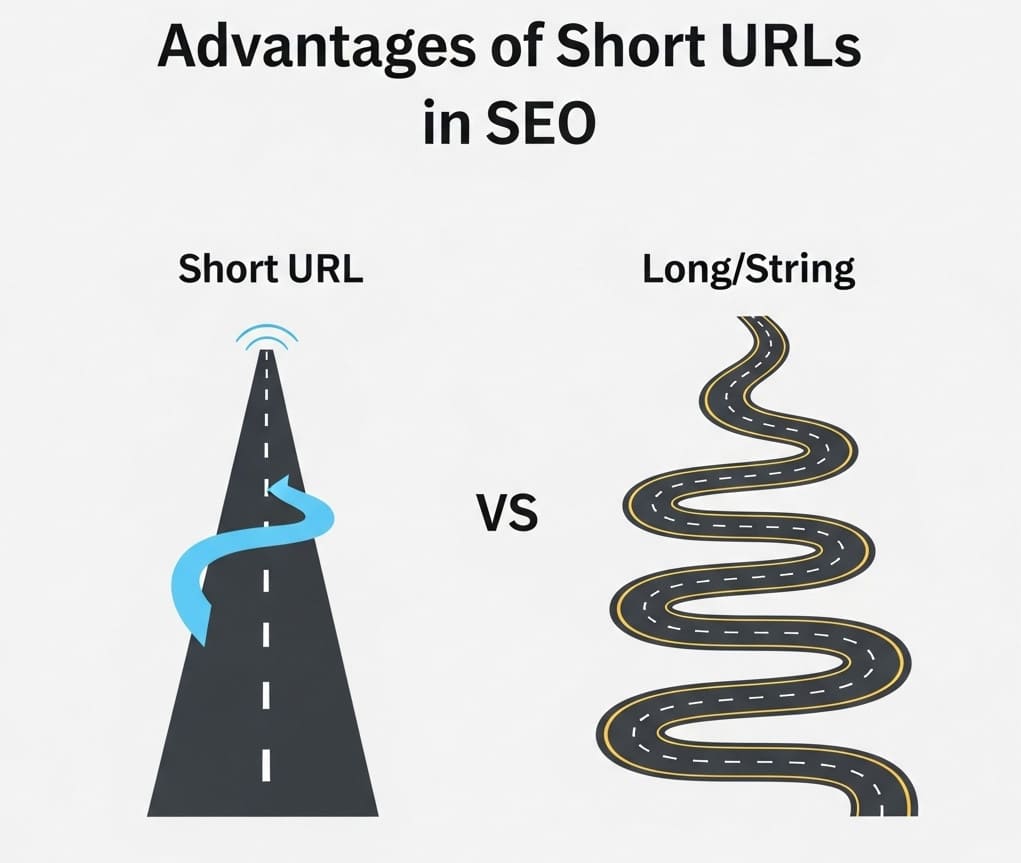
A short URL is basically just a redirect. Instead of sending a user directly to a page like:
https://yourwebsite.com/blog/how-to-grow-seo-traffic
you send them to something like:
bit.ly/abc123
which then redirects them to the real page.
So the short link itself is not the destination. It’s just a middle step.
And that’s important, because SEO doesn’t really care about the middle step as much as it cares about the final destination._Image_1.jpg)
So… do short URLs affect SEO directly?
Here’s the simple truth: in most cases, no, short URLs do not directly affect SEO rankings.
Google doesn’t rank the short link. It ranks the final page. As long as the redirect is properly set up (usually a 301 redirect), the SEO value passes through to your actual URL.
So if you’re just using a short link in a tweet, a Facebook post, or a bio link, your rankings are not going to suddenly drop because of that.
But that’s only part of the story.
Because while short URLs don’t directly impact SEO, they can influence things that do matter for SEO.
And that’s where it gets interesting.
Click behavior matters more than people realize
Let’s be honest, SEO isn’t just about technical signals anymore. User behavior plays a quiet but important role.
When people click a link, stay on the page, or bounce immediately, those signals matter.
Now imagine a short URL that looks suspicious or unclear. Something like a random string with no context.
Some users hesitate. Some don’t click at all. And some click but immediately leave because the expectation wasn’t clear.
None of this directly “breaks SEO,” but it affects engagement signals, and those signals can indirectly influence performance over time.
So when people ask do short URLs affect SEO, what they’re often really experiencing is a shift in user behavior, not rankings.
Trust plays a bigger role than technical SEO
Here’s something that doesn’t get said enough.
SEO is not just search engines. It’s also people.
If a link looks clean, descriptive, and familiar, people are more likely to click it. If it looks random or shortened without context, some users hesitate.
That hesitation doesn’t show up in Search Console as a warning. But it shows up in lower engagement.
And lower engagement can eventually lead to weaker performance, especially if your traffic depends on clicks from social platforms.
So short URLs don’t harm SEO directly, but they can influence trust. And trust influences everything else._Image_2.jpg)
The real SEO risk: losing context
This is where things get a bit more subtle.
Search engines like context. They like structure. They like clarity.
A full URL like:
yourdomain.com/seo-guide-for-beginners
gives both users and systems a hint about what the page is about.
A short URL like:
bit.ly/3Xk9aP
gives nothing.
Now, again, Google doesn’t rank the short link. But when short links are used internally or excessively across content strategies, you lose something important: semantic clarity.
You’re basically removing descriptive signals from your ecosystem.
And while that might not hurt rankings directly, it can make your content strategy less transparent and harder to analyze.
Redirects are usually fine… but not always invisible
Most modern shorteners use 301 redirects, which pass SEO value properly. So technically, there’s no loss in ranking power when used correctly.
But here’s where people sometimes run into problems.
If you stack multiple redirects, or use poorly configured tools, things can get messy. Slower redirects, broken chains, or unnecessary hops can create a worse user experience.
And user experience does matter.
Not as a ranking factor in a direct sense, but as part of the overall quality signals Google looks at.
So while short URLs themselves are fine, bad implementation is where issues can creep in.
Social sharing vs SEO strategy (important distinction)
This is something worth separating clearly.
Using short URLs in social media is very different from using them in SEO-focused content.
On platforms like Twitter, Instagram, TikTok, or Facebook, short links are actually useful. They’re cleaner, easier to track, and visually less overwhelming.
But in SEO content, especially blog posts or internal linking strategies, full URLs are often more beneficial because they provide clarity and context.
So the question “do short URLs affect SEO” often misses this distinction. It’s not about the tool itself, it’s about where and how you’re using it.
Tracking is where short URLs actually shine
If we’re being practical, the biggest advantage of short URLs isn’t SEO—it’s data.
You can track clicks, sources, timing, and sometimes even behavior patterns depending on the tool you use.
That information can be incredibly useful for understanding your audience.
For example, you might discover that a certain blog post performs better on mobile traffic from Instagram than desktop traffic from Google. That kind of insight helps refine your strategy in ways SEO alone can’t.
So while short URLs don’t boost SEO directly, they can improve your marketing decisions, which eventually supports SEO indirectly.
A small but important warning about overuse
There’s a point where using too many short URLs becomes counterproductive.
If every link you share is shortened, especially across different platforms, it starts to look less natural. Users become less confident about clicking, and platforms sometimes treat repeated short links as low-trust behavior.
It doesn’t mean you should avoid them completely. It just means they should be used intentionally, not automatically.
Because SEO isn’t just about search engines—it’s also about how people interact with your content across the web.
So what actually matters for SEO?
If we strip everything down, SEO is still mostly about:
Quality content
Clear structure
Good user experience
Fast and accessible pages
Trustworthy linking behavior
Short URLs don’t really interfere with those things unless they’re misused or poorly implemented.
So instead of asking do short URLs affect SEO, a better question might be:
“Are short URLs helping or distracting from my user experience?”
That’s where the real answer usually sits.
Let’s be honest for a second
Most SEO problems people worry about aren’t caused by one small technical detail like a short URL.
They come from bigger issues—unclear content, weak engagement, or mismatched expectations between what users see and what they get.
Short URLs are just one small piece in a much larger system.
Conclusion
So, do short URLs affect SEO? Not directly.
They don’t change rankings by themselves, and they don’t harm your site when used correctly. But they can influence user behavior, trust, and engagement, which are all indirectly connected to SEO performance.
The key is not to overthink them, but to use them intentionally. In social sharing, they’re useful. In SEO content, full URLs often provide more clarity. And in tracking campaigns, they can give you valuable insights.
At the end of the day, SEO isn’t about one tool or one decision. It’s about how all the small pieces work together.
FAQs
1. Do short URLs affect SEO rankings directly?
No, search engines rank the final destination page, not the short URL.
2. Are short URLs bad for SEO?
Not inherently. They are neutral when used correctly with proper redirects.
3. Can short URLs hurt user experience?
Yes, if they lack context or look suspicious, they can reduce trust and clicks.
4. Should I use short URLs in blog posts?
It’s better to use full URLs for SEO content and short URLs for social sharing.
5. Do redirects from short URLs pass SEO value?
Yes, if they use proper 301 redirects, SEO value is passed to the destination page.
Tags
#seo #shorturls #digitalmarketing #urlshortener #googleranking #searchengineoptimization #contentstrategy #onlinetraffic #marketingtips #websitegrowth