
Let's start with the honest version of this question: you've probably used a URL shortener at some point — bit.ly, TinyURL, or maybe a branded one your company set up — and at some point, a voice in the back of your head went, "wait, is this actually hurting my Google rankings?"
It's a fair thing to wonder. SEO has a reputation for punishing things that seem totally harmless. And short URLs, by their nature, strip out all the keyword-rich context that SEO best practices say you should be including in your links. So... yeah. Reasonable concern.
Here's the short answer: it depends on how you use them. But the long answer is actually more interesting, and more useful, than most of what's written about this topic online.
What actually happens when someone clicks a short URL
Most URL shorteners work through a redirect. You click on bit.ly/xyz123, the shortener's server receives the request, and then sends your browser to the real destination — say, yourwebsite.com/blog/best-coffee-grinders-2026.
The type of redirect matters a lot here. There are two main kinds you'll run into: 301 (permanent) and 302 (temporary). A 301 tells search engines that the content has permanently moved to the new URL, and it passes almost all of the original page's link equity along with it. A 302 is more of a "hey, go here for now" signal — and it historically didn't pass as much SEO value.
Most reputable URL shorteners use 301 redirects. Bitly does. So do most branded shorteners built on proper platforms. In that case, Google has said — and confirmed repeatedly — that a 301 redirect passes PageRank. The link juice flows through.
But "almost all" isn't "all." Some tests and anecdotal reports suggest there's still a very slight dilution with redirect chains. Nothing catastrophic. But not perfectly identical to a direct link either.
Here's the thing worth knowing: if someone links to your site through a shortened URL, that backlink still counts. The SEO value isn't lost. It just takes a tiny detour on its way to you.
Where short URLs actually cause problems
So if redirects mostly preserve link equity, why do some SEOs still tell you to avoid URL shorteners? Because the real issues aren't about redirects at all.
The first is crawlability. Googlebot follows redirects, but every redirect is an extra hop. If you have a shortened URL that redirects to another redirect (think: a link you shared on a platform that adds its own tracking layer), you can end up with a redirect chain two or three levels deep. Google generally stops following after five or so hops, but even before that, you're burning crawl budget and potentially losing some passing value.
The second issue is more practical than algorithmic: you lose descriptive context. A link like yoursite.com/guides/how-to-start-a-podcast tells both users and search engines exactly what they're getting. A shortened link tells nobody anything. That matters less for the SEO of your destination page — the destination URL is what Google ultimately indexes — but it affects click-through rates, trust, and user behavior, which do influence rankings indirectly.
Third, and this one's under-discussed: branded short links can sometimes get flagged as spam in certain contexts. If you're mass-distributing shortened links through email campaigns or social posting, and those links get reported or blocked, that can create a messy situation that bleeds into your domain's overall reputation over time. Probably not a direct ranking factor. But not great for your ecosystem.
The case where short URLs actually help
Here's where it gets more nuanced. Shortened URLs — particularly custom branded ones like go.yourbrand.com/campaign-name — serve legitimate purposes that can indirectly support SEO goals.
For one, they're easier to share. A cleaner, shorter link gets clicked more often, especially in contexts like social media bios, YouTube descriptions, or podcast shownotes where the actual URL is visible. More clicks means more traffic, more engagement, and potentially more natural backlinks from people who discovered your content through those channels.
Custom short domains also build brand recognition. When people consistently see links from go.yourbrand.com, they start associating that domain with your content. That's not nothing — brand signals do factor into how Google perceives authority.
And for UTM tracking purposes, shortening a monstrous UTM-tagged URL before putting it in a social post is just sensible. The tracking still works. The link still functions. Nobody has to see a 200-character URL in their Instagram story.
What Google has actually said about this
John Mueller from Google has addressed URL shorteners in various Q&A sessions over the years. The consistent message has been: if it's a proper 301 redirect and the destination page is quality content, the shortener itself isn't the issue. Google treats it like any other redirect.
What Google doesn't like is manipulation — using redirects to mask low-quality destinations, or running redirect chains to obscure link origins in link schemes. If you're doing legitimate stuff, a short URL isn't going to tank your rankings.
It's also worth noting that Google itself uses short URLs internally for some of its own resources. goo.gl existed for years. They knew how redirects worked. They weren't shooting themselves in the foot.
Practical guidelines worth actually following
If you're using URL shorteners for social media shares of your own content, you're almost certainly fine. The links still get indexed, the redirects pass value, and if your shortener offers analytics, you get the added bonus of click data.
If you want a shortener that doesn't make you second-guess your rankings, AtomicURL is worth checking out — branded links, proper redirects, your data stays yours.
If you're building backlinks specifically for SEO purposes — say, guest posts, resource pages, outreach — then yes, you want to use the full direct URL. Not because Google penalizes short links, but because there's simply no reason to introduce any friction or potential dilution into a link you're deliberately placing for ranking purposes. Cleaner is better when you have a choice.
If you're running a brand and you have the bandwidth to set up a custom short domain, do it. yourband.co/join looks more credible than bit.ly/8hfg293 in virtually every context. It also keeps your link performance data in-house instead of on a third-party platform that could change its pricing or shut down someday.
And if you're inheriting an old site that has thousands of shortened links floating around the internet pointing back at your pages — don't panic. Unless those links are going through multiple redirect hops or pointing to spammy content, they're probably fine. Focus your cleanup energy on broken links first.
The bottom line — and the honest version
Short URLs don't inherently hurt SEO. That's not a hedge; it's genuinely true based on how redirects work and what Google has confirmed. The fear is partly a holdover from older SEO thinking, when redirect behavior was less predictable and Google's handling of it was less transparent.
The real factors that matter are: redirect type (301, not 302), redirect depth (keep chains short), destination quality (always), and whether you're using them for legitimate purposes or to obscure something sketchy.
If you're a blogger or content creator using bit.ly to share your articles on Twitter or in newsletters, this should not be keeping you up at night. Seriously. There are fifty more impactful things you could be doing for your SEO than worrying about this.
Where it starts to matter is at scale — large sites, heavy link-building campaigns, or situations where you're stacking redirect after redirect. That's when you want to audit and tighten things up.
Otherwise? A shorter link is just a shorter link. Use it when it makes sense. Don't use it when it doesn't. Your rankings will be fine.
Tags
#SEO #URLShorteners #SearchRankings #DigitalMarketing #LinkBuilding #GoogleSEO #ContentMarketing #301Redirect #TechnicalSEO #BloggingTips #URLOptimization #SEOStrategy #WebTraffic #OnPageSEO


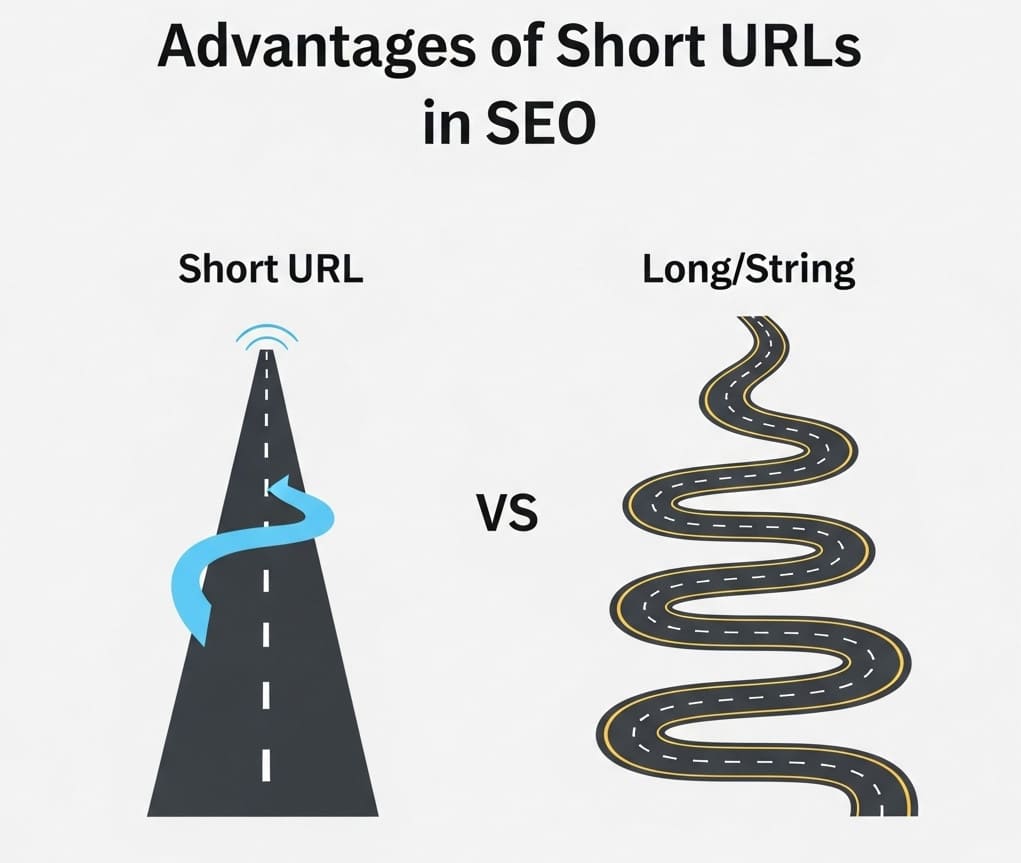
_Image_2.jpg)