LinkedIn is a different beast. Anyone who's spent serious time marketing on the platform knows that what works on Twitter or Instagram doesn't translate here—the audience is more skeptical, more professional, and much quicker to scroll past anything that feels like it was designed to manipulate rather than inform.
And yet. The links most B2B marketers share on LinkedIn still look like they were generated by a server having a bad day. Long, parameter-heavy, UTM-tagged URLs that take up three lines of a post and immediately signal "this was assembled by a marketing tool, not a person." That's a trust problem before anyone has even read the content.
Short links for LinkedIn aren't just about aesthetics, though the aesthetics matter more than people admit. They're about how you show up on a platform where professional credibility is literally the currency.
Why LinkedIn Specifically Rewards Clean, Intentional Links
LinkedIn's algorithm has always been more nuanced than the other major platforms about how it treats links. External links—especially ones that take people off LinkedIn—get less organic reach than posts without links, or posts where the link is in the comments rather than the body. That's been the practical reality for a while now, and most experienced LinkedIn marketers have adapted.
But here's what people adapt less on: the quality and appearance of the links they do share. Whether the link is in the post body, the first comment, or a direct message follow-up, its appearance still sends a signal. A clean, branded short link reads as professional. A raw URL with tracking parameters reads as careless—or worse, as an attempt to hide what you're sending someone to.
For B2B marketers specifically, this matters even more. Your audience isn't impulse-clicking based on entertainment value. They're making small, ongoing judgments about whether you're a credible source worth following. The link you share is part of that judgment.
A short link like atomicurl.com/q3-report or atomicurl.com/bookademo carries information and signals intentionality. It looks like something a person created, not something a CMS spat out automatically. That's a small thing that compounds across every post, every message, every campaign.
Branded Short Links in LinkedIn Posts: What Actually Works
The best practice isn't complicated, but it takes some deliberate thought: match the link alias to the content you're sharing.
If you're posting about a case study, the link should feel like it belongs with the case study—something like /casestudy-fintech or /results-2025. If you're sharing an event registration, /summit25 or /registerhere is infinitely cleaner than whatever your event platform generated. If you're promoting a lead magnet download, /freeguide or /marketingreport does more work than a random short link slug ever could.
AtomicURL makes this fast. Paste your URL, customize the alias, copy it. No account needed. The instant link shortening means you can do this in the middle of drafting a post without breaking your flow—create the link, drop it in, and you're done in under a minute.
The customizable links feature is what separates this from basic shorteners. You're not just making the URL shorter; you're making it purposeful. And on LinkedIn, purpose reads as competence.
Managing Campaigns Without Losing Your Mind
Here's the part of LinkedIn marketing that nobody really prepares you for: the volume. If you're actively doing B2B content marketing on the platform—regular posts, sponsored content, newsletter links, DM outreach sequences, event promotions—the number of unique links you're managing at any given time gets large quickly.
One campaign might have a primary post link, a version for the comments, a version in the newsletter, and a version you're using in outreach messages. Different links so you can distinguish where traffic is coming from. Multiply that across multiple campaigns and multiple months and you're suddenly managing dozens of links with no clear system.
The URL manager at AtomicURL is the answer to this. All your links in one organized place, where you can see what's active, update destinations without changing the link itself, and keep track of what's pointing where. When your landing page URL changes—which it will, at some point—you update the destination in the manager and every short link pointing there is instantly corrected. No broken links. No scrambling.
For teams producing content at scale, the bulk URL shortener handles up to 50 URLs at once. If you're prepping a month of content with a dozen different destination links, you don't shorten them one at a time. You process the batch, export the results as a CSV, share it with whoever needs it, and move on. That CSV export is genuinely useful for campaign documentation and client reporting—a clean, shareable record of what links exist and where they go.
The Trust Factor in B2B Direct Messaging
Let's be direct about something that comes up constantly in B2B LinkedIn outreach: people are suspicious of links in cold messages. Reasonably so. Spam and phishing attempts on the platform have made a lot of professionals reflexively cautious about clicking links from people they don't have a prior relationship with.
If you're doing outreach—whether that's sales prospecting, partnership conversations, recruiting, or anything else—the links you include matter a lot. A raw URL with tracking parameters looks like it was grabbed from a marketing automation tool and pasted in. A clean, branded short link looks like you actually thought about what you were sending.
There's also a practical tool for the person receiving your link: the URL expander at AtomicURL lets anyone check where a short link leads before clicking it. Knowing that this transparency exists—and being the kind of marketer who uses clean, honest, branded links that pass that check without issue—positions you on the right side of the trust equation. Your links look good under inspection, because they're going exactly where they say they're going.
Time-Limited LinkedIn Promotions and Expiring Links
LinkedIn promotions often have natural windows. A webinar registration opens and closes. An early-bird pricing period runs for a limited time. A content offer is available until a certain date. For all of these, the link you share should ideally reflect the same limits as the offer itself.
Custom link expiry lets you set a date when a short link stops working. You post about a webinar registration that closes Friday—the link expires Friday. No manual deactivation, no risk of someone registering after the window closed and then being confused about why they didn't get a confirmation. The link accurately represents the offer, and it stops when the offer stops.
This is actually better UX than most B2B marketers think about. When someone clicks an expired link and sees that the offer has ended, that's a clear, honest message. It's better than landing on a page where the promotion is technically over but the form is still accepting submissions—which creates a mess on the backend and a confusing experience for the person who just submitted.
Click-based expiry adds another layer of control for capacity-limited situations. Running a private beta with 100 spots? Running an exclusive roundtable for 20 senior decision-makers? Set a click limit on the registration link. The 101st click doesn't go through. The limit you advertised is the limit that actually exists. On LinkedIn's professional audience, that kind of integrity in your marketing is noticed more than on any other platform.
A Note on QR Codes for LinkedIn at Events and Conferences
This one's slightly counterintuitive but genuinely useful. LinkedIn is used heavily around professional events—people connect during conferences, reference LinkedIn profiles, share LinkedIn posts in presentations. If you're presenting or exhibiting at a B2B event, having a QR code that links to a specific piece of content, a registration page, or your LinkedIn profile itself is a clean way to bridge the physical and digital.
AtomicURL generates QR codes for any short link directly—no separate tool needed. You create a branded short link, download the QR code, and put it on your slide deck, your booth display, your handout. Anyone who scans it goes straight to your destination. And because it's a short link QR code rather than a full-URL one, the code itself is cleaner and scans more reliably at various sizes.
The quick-share buttons for various social platforms also make it easy to push a LinkedIn post link to other channels simultaneously when you're cross-promoting content. Same link, consistent destination, distributed from one place.
Thinking Like a B2B Marketer About Link Architecture
Here's something most LinkedIn marketing guides don't get into: the link architecture across your content should be intentional, not accidental.
What does that mean in practice? It means deciding, for each piece of content, which link variant lives where. The link in the organic post, the link in the paid promotion, the link in the newsletter, the link in outreach—these should ideally be traceable back to source. Customizable short links with distinct aliases (/demo-organic vs /demo-outreach vs /demo-newsletter) give you that clarity without needing a complex UTM parameter setup.
It also means maintaining your links over time rather than creating and forgetting them. The URL manager handles the organizational side of this. Unlimited links means you're never artificially constrained in how many unique link variants you create. And because every link you create has lightning-fast redirection and reliable performance, the experience on the other end is always clean—no slow redirects, no intermittent failures that make your campaign look broken.
For teams and agencies managing multiple clients or multiple LinkedIn presences, this system scales. The same tools that work for a solopreneur posting twice a week work for an agency managing a dozen accounts and hundreds of campaign links simultaneously. The CSV export capability is the connective tissue there—it keeps everything documented and shareable across the people who need to know what exists.
The Bottom Line for B2B Marketers
LinkedIn is a platform that rewards professionalism in the details. The way your profile looks, the way your content reads, the way your links appear—all of it contributes to how you're perceived by an audience that's actively evaluating whether you're worth paying attention to.
Short links aren't a silver bullet. But messy, generic, or auto-generated links are a small, consistent drag on how professional your presence looks—and on a platform like LinkedIn, small drags accumulate into real perception problems.
Start treating your links the way you treat your copy: with intention, with branding, and with the audience's experience in mind. AtomicURL makes that accessible without requiring tools knowledge, subscription commitments, or any setup overhead.
Create better links. Share them with confidence. And stop letting your URLs undercut the work your content is doing.
Tags
#LinkedInMarketing #B2BMarketing #ShortLinks #URLShortener #AtomicURL #LinkedInTips #ContentMarketing #DigitalMarketing #B2BStrategy #SocialSelling #LinkedInStrategy #MarketingTools #LeadGeneration #BrandedLinks #ProfessionalMarketing
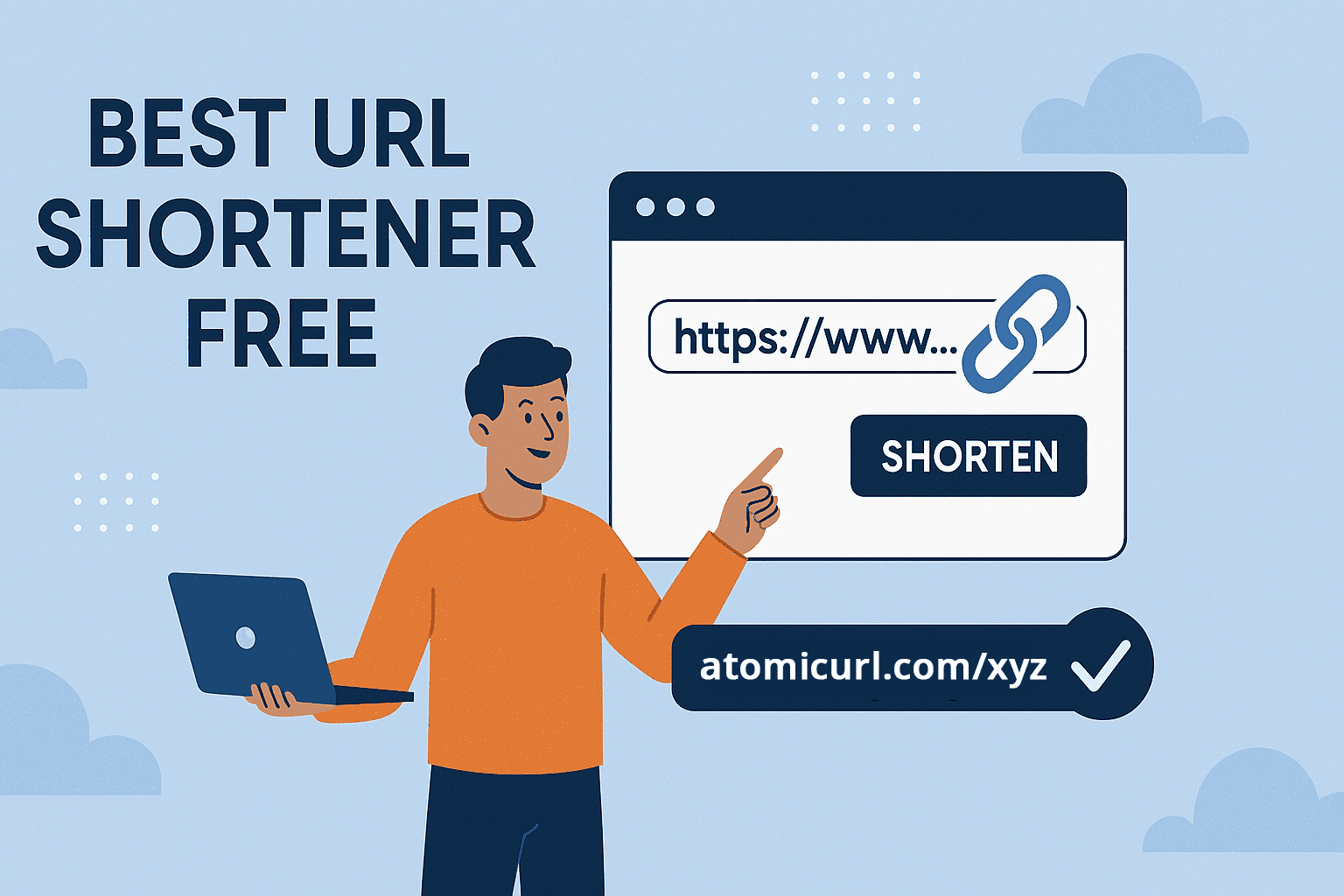
_Image_2.jpg)