
There's a reason the best e-commerce brands obsess over every touchpoint of the customer experience—the packaging, the confirmation email, the way returns are handled. Because every interaction either builds trust or quietly chips away at it. Your URLs are a touchpoint too. Most brands treat them like plumbing: functional, invisible, not worth thinking about. The ones who treat them like copy—intentional, branded, readable—get more clicks for the same traffic.
That's not a small difference when you're running at scale.
Why E-commerce URLs Are a Conversion Asset Most Brands Ignore
Walk through what a customer actually sees before they buy anything from an online store. They encounter the brand somewhere—an ad, an Instagram post, a friend's recommendation, a Google result. They follow a link. That link is often the first thing their browser resolves before they see the product or the store. And if that link looks like it was generated by a server having an argument with itself—/products/summer-collection-2025?variant=33891&ref=ig&campaign=june-promo—something in the customer's brain quietly registers: messy.
It's not a conscious thought. It doesn't stop the click. But first impressions compound. Brands that look organized at every level, including in their URLs, build more ambient trust than brands that look assembled on the fly.
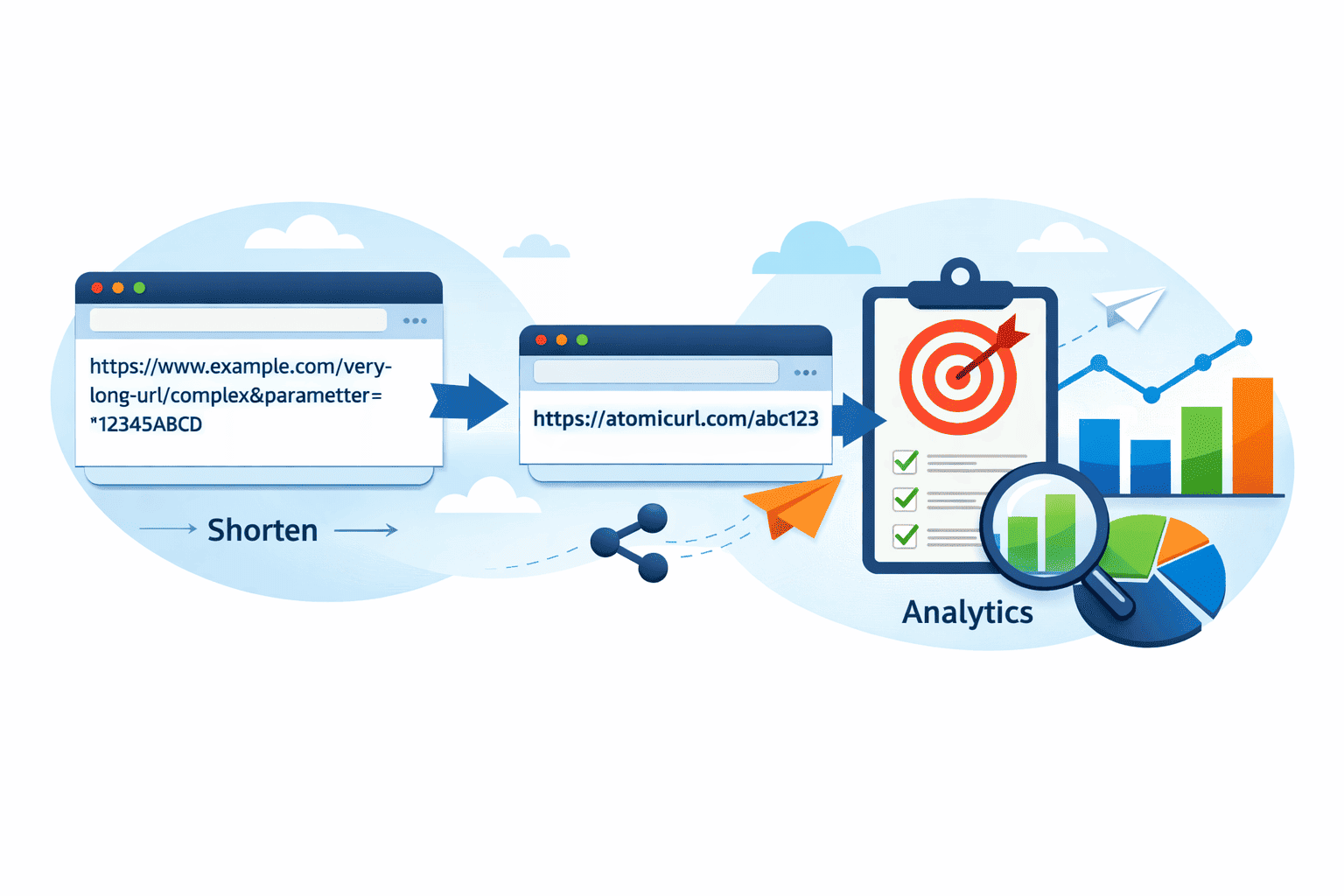
Branded links—customized short links with slugs that mean something—are the version of this that's actually achievable. You're not redesigning your entire URL architecture. You're just choosing what the link looks like when you share it.
atomicurl.com/summersale versus whatever your CMS generated. The destination is identical. The impression is not.
The Specific E-commerce Scenarios Where This Pays Off
Let's move past the abstract case and into the situations where branded short links actually change outcomes for e-commerce businesses.
Product launches. When a new product drops and you're sharing links across email, social, influencer partnerships, and paid channels, the link is everywhere. On Instagram stories, in newsletter subject lines, in the copy of Facebook ads. A branded link like /newdrop or /launch-sept25 is readable in a thumbnail, sayable in a video, typeable from memory. A raw product URL with variant parameters is none of those things.
Flash sales and limited-time offers. This is probably the most natural fit. You're creating urgency—24 hours only, while supplies last, ends at midnight. The link you share should feel as intentional as the offer itself. /flash24 or /hoursleft isn't just cleaner; it's part of the marketing. The link reinforces the message.
Influencer and affiliate campaigns. When you're sending product links to influencers or affiliates, you want those links to be trackable and brand-consistent. Giving someone /collab-sarahm or /promo-partner is cleaner than a UTM-tagged monster URL, and it means every time that link appears in their content, it looks like a legitimate brand touchpoint rather than a marketing automation artifact.
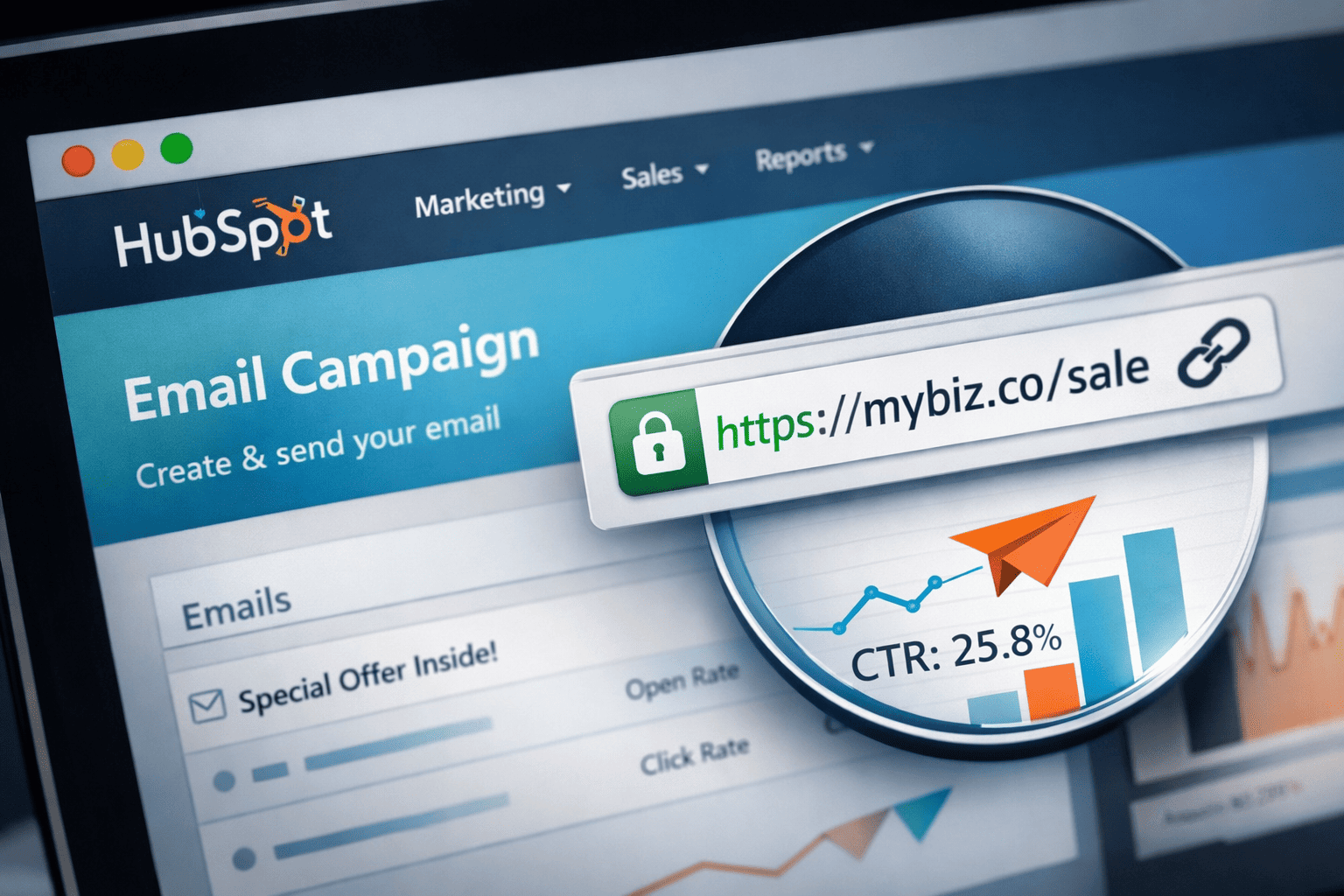
Email marketing. This one is underrated. Long URLs in emails are technically clickable but visually ugly, and they can trigger spam filters in some environments. A clean branded link—especially one named after the email's offer—is better to look at, less likely to get flagged, and gives the recipient one more reassurance that this email came from somewhere legitimate.
Customizable Links Without the Overhead
The barrier to doing this well used to be real. Custom branded links typically required configuring a custom domain, setting up redirects, and dealing with technical infrastructure that most small and mid-sized e-commerce brands didn't have the resources to maintain.
AtomicURL removes most of that friction. You go to the site—no account creation, no sign-up required—paste your product URL or landing page URL, choose a custom slug, and you have a branded short link in under a minute. The link is instantly live, SSL-secured, and redirects with the kind of speed that doesn't add noticeable latency between click and product page.
One-click copy means you're not wrestling with selecting and copying from a text field. The link is ready to drop into your email platform, your social post, your influencer brief, your ad copy—wherever it needs to go next.
For brands running regular campaigns with many links, the bulk URL shortener lets you process up to 50 URLs at once. If you have a collection launch with 20 individual product links, a sale event with multiple category pages, or a seasonal campaign with variants across channels—you don't shorten them one at a time. You process the batch, get a CSV of original and shortened URLs back, and distribute from that organized file. The CSV export is genuinely useful for keeping campaigns documented and for sharing link sets with team members or agency partners.
Controlling the Sale Window With Link Expiry
Here's a feature that e-commerce brands should be using more than they do: custom link expiry tied to promotional windows.
Every flash sale, every early access event, every limited-time bundle has a start and end. When the sale ends, the link to the sale page should ideally stop working—or at minimum, redirect somewhere appropriate. Letting a "24-hour sale" link stay active for weeks after the window closed is confusing for anyone who finds it later, and potentially frustrating when they arrive at a page where prices have reverted.
AtomicURL's custom link expiry lets you set a date and time when a branded link automatically deactivates. You create the link, set the expiry for when the sale ends, and that's it. The link enforces the promotional window without requiring anyone to manually remember to deactivate it at midnight or first thing in the morning.
Click-based expiry adds another layer of control for quantity-limited scenarios. Running a special offer for the first 100 customers? The link expires after 100 clicks. The offer is genuinely what it says it is—limited to the first 100—without manual monitoring or the risk that the 150th customer still gets the deal because someone forgot to take the link down.
These aren't niche features. For any e-commerce store running promotions with real limits, they're the difference between marketing that actually enforces what it promises and marketing that relies on customers not noticing when things are supposed to be over.
VIP Access and Early Drops: Password-Protected and One-Time Links
The best e-commerce brands have developed VIP customer relationships—people who get early access to new collections, exclusive discount windows, private sale events. Delivering that exclusive access via links requires some control over who actually gets in.
Password-protected links are one clean solution. You send a branded short link to your VIP list—/vipaccess or /early-drop—and only people with the password can reach the destination. The link can be shared publicly or leaked without it being usable by just anyone. Access is controlled by the password, not by how carefully the link was guarded in transit.
One-time links are the most restrictive version of this. The link works exactly once. For delivering unique discount codes, personalized access credentials, or exclusive download links to individual customers, a one-time URL means that specific link is tied to that specific person's action. Once they've used it, it's done. It can't be forwarded and reused, can't be shared in a group chat, can't be resold.
Both approaches are available without complex technical setup. You create the link, configure the access setting, and share it. The feature handles the enforcement.
QR Codes as an E-commerce Bridge
Physical retail and e-commerce aren't as separate as they used to be. Brands with physical products—whether sold in their own stores, through retail partners, or at pop-up events—have real opportunities to bridge the physical and digital experience with QR codes.
A QR code on a product tag, a package insert, or a shelf display that leads to a product page, a review platform, a loyalty program signup, or a complementary product recommendation is a genuinely useful customer experience. But the QR code is only as good as the link it encodes, and only as adaptable as the system that manages it.
AtomicURL generates QR codes directly for any branded short link. You create /productreview or /loyaltyclub, download the QR code, and distribute it however your physical materials require. If the destination changes—the review platform shifts, the loyalty program URL updates, a landing page gets redesigned—you update the destination in the URL manager and the existing QR code (wherever it's been printed and distributed) continues to work correctly. No reprinting. No broken codes in the field.
The quick-share buttons for various social platforms also make it straightforward to push your branded product or campaign links across Instagram, Facebook, Twitter, WhatsApp, and other channels from one place—consistent link, consistent destination, distributed across wherever your customers are.
Keeping Track of What Points Where
If you're running multiple product lines, multiple campaigns, and multiple promotional windows, the number of active branded links grows fast. The URL manager at AtomicURL is where all of that stays organized—every link visible, every destination updatable without changing the link itself.
This is particularly useful when your store does a site migration, a platform change, or a URL restructure. Instead of all your existing branded links breaking and needing to be replaced, you update the destinations in the manager. Everything that was pointing to old URLs now points to the correct new ones. The links you distributed in emails, embedded in social posts, printed in materials, encoded in QR codes—they all continue to work.
The URL expander is useful from the other direction: verifying where any short link actually leads before clicking or sharing it. In an e-commerce context where branded links from partners, affiliates, or vendors are common, being able to quickly confirm a link's destination before including it in your own communications is a sensible operational habit.
The Compounding Effect of Branded Link Consistency
Here's the thing about treating links as a branding element rather than a technical afterthought: it compounds. One branded link is a nice touch. Branded links across every campaign, every email, every social post, every piece of physical marketing creates a pattern that your audience starts to recognize as your standard.
Customers who receive links from you that consistently look clean, readable, and intentional develop a small but real expectation of quality. They're slightly less likely to hesitate before clicking. Slightly more likely to trust the destination sight unseen. Slightly more likely to share the link to a friend because it looks like something worth sharing rather than something that looks automatically generated.
None of that is measurable in a single campaign. But across the lifetime of a customer relationship, those small differences in trust and friction show up in lifetime value, in referral behavior, in the overall health of a brand that people genuinely like interacting with.
Starting is free, requires no account, and takes about a minute. Go to AtomicURL, create your first branded product link, and see what it feels like to share something that looks like it was made on purpose.
Tags
#EcommerceMarketing #BrandedLinks #URLShortener #AtomicURL #OnlineShopping #EcommerceTips #DigitalMarketing #ShortLinks #ProductMarketing #EmailMarketing #SocialMediaMarketing #FlashSale #QRCodes #CustomerExperience #MarketingTools
_Image_1.png)
_Image_1.png)
_Image_1.jpg)

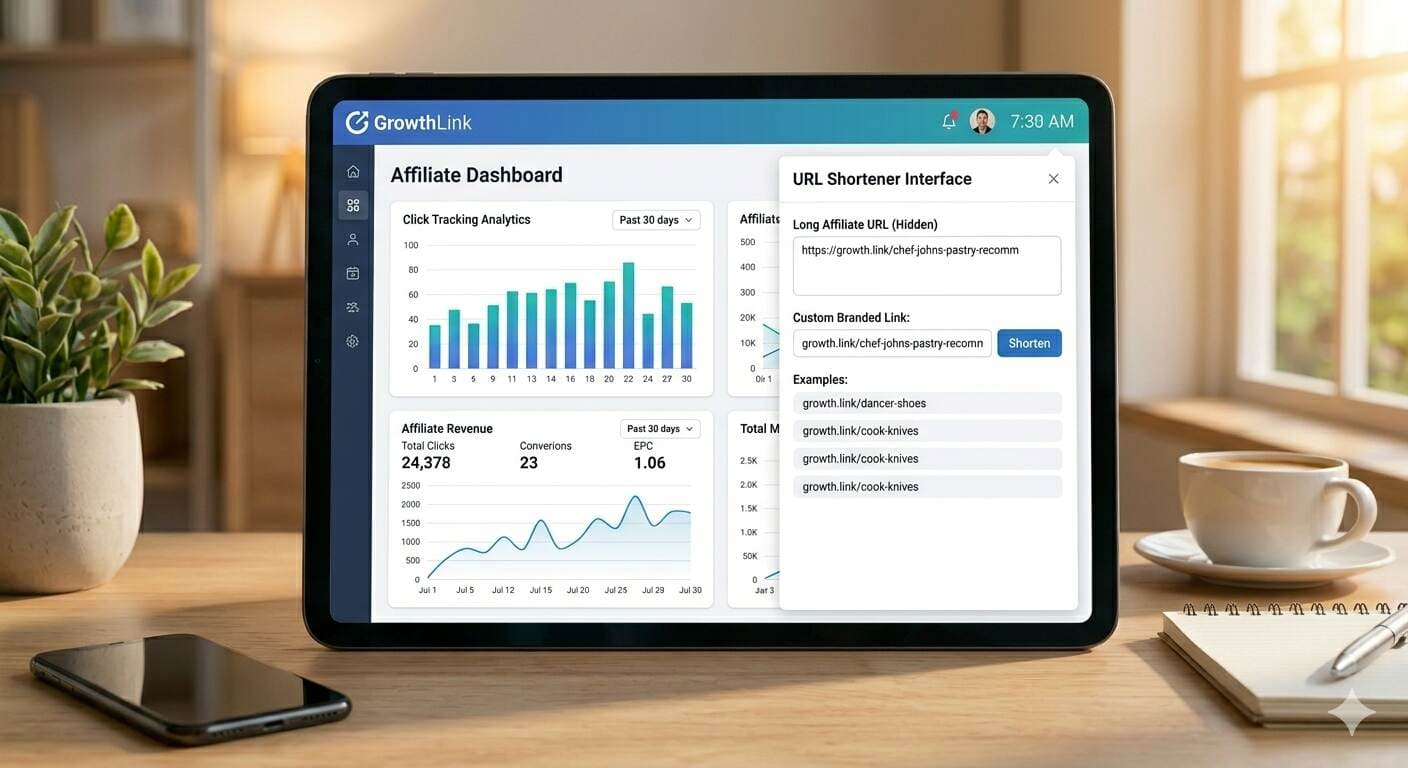
_Image_1.jpg)

.jpg)
.jpg)

.jpg)