

It works fine… until suddenly it doesn’t
You post a short link, everything looks normal, and then out of nowhere, something weird happens.
The post gets less reach than expected. Or worse, you see a warning. Sometimes the link doesn’t even show properly. In some cases, it just refuses to post at all.
At that point, most people assume the tool is the problem. Maybe the shortener is flagged, or maybe the link is broken.
But here’s the thing—it’s rarely that simple.
When short links get blocked on social media, it’s usually not about one obvious mistake. It’s more like a combination of small signals adding up over time.
Social platforms don’t actually trust links by default
Let’s start with something that might feel a bit uncomfortable.
Social media platforms don’t fully trust external links.
It’s not personal. It’s just how they’re built.
Their goal is to keep users inside the platform for as long as possible. So anything that takes users away—especially through redirects—gets a little extra scrutiny.
Short links, by design, are redirects. They hide the final destination behind another URL.
From a system perspective, that creates uncertainty.
Where does this link go? Is it safe? Is it trying to bypass something?
Even if your link is completely clean, the structure itself triggers caution.
Too many people use short links the wrong way
Let’s be honest for a moment.
Short links have been heavily abused over the years. Spam campaigns, misleading redirects, low-quality promotions—they’ve all used shortened URLs at some point.
Because of that history, platforms have become more sensitive.
They don’t just evaluate your link. They evaluate patterns.
If a certain short domain has been associated with spam activity in the past, it can affect how your link is treated—even if you’re using it responsibly.
So when you’re wondering why short links get blocked on social media, part of the answer is simply inherited reputation.
You’re not always judged alone. Sometimes you’re judged alongside everyone else using the same system.
Repetition can quietly trigger restrictions
This one catches a lot of people off guard.
You find a link that works, and you start using it more often. Same link, multiple posts, maybe across different groups or pages.
It feels efficient.
But from the platform’s perspective, repeated sharing of the same short link can start to look automated or promotional.
Not necessarily spam, but close enough to raise suspicion.
Over time, that pattern can reduce reach or even trigger temporary restrictions.
So it’s not just about what you’re sharing—it’s how often and how consistently you’re sharing it.
Lack of context makes links look suspicious
Imagine scrolling through a feed and seeing a post with a short link and almost no explanation.
It doesn’t feel very inviting.
Now imagine that happening repeatedly across different posts.
Even if the link is legitimate, the lack of context makes it harder to trust.
Social platforms pick up on that kind of behavior. Posts that feel unclear or low-value tend to perform worse, and sometimes they get flagged more easily.
So when short links get blocked on social media, it’s often not the link alone. It’s how the link is presented.
Redirect chains can create technical issues
This is a bit more on the technical side, but still worth mentioning.
Sometimes a short link doesn’t just redirect once. It might go through multiple steps before reaching the final destination.
Each step adds a bit of delay and complexity.
For users, that can feel like a slow or broken experience. For platforms, it can look like unnecessary obfuscation.
Neither is ideal.
Most of the time, a single clean redirect works fine. But when things get layered, problems start to appear.
The destination matters more than you think
Here’s something that often gets overlooked.
Even if your short link is fine, the page it leads to plays a big role in how it’s treated.
If the destination looks low-quality, overly promotional, or mismatched with the post, it can affect how the link is perceived.
And over time, that perception feeds back into how your future links are handled.
So when short links get blocked on social media, sometimes the issue isn’t the link at all. It’s what’s waiting on the other side.
User behavior feeds into the system
This part is subtle, but important.
Platforms don’t just analyze links—they also observe how users interact with them.
If people click your link and quickly leave, or report it, or ignore similar posts over time, those signals can influence how your future content is distributed.
It’s not immediate, and it’s not always obvious. But it builds gradually.
So a link that once worked fine might start performing worse, not because it changed, but because the surrounding behavior did.
Some platforms are stricter than others
Not all social media platforms treat short links the same way.
Some are more relaxed and allow them without much friction. Others are more cautious, especially when it comes to repeated sharing or certain domains.
This is why a link might work perfectly on one platform and struggle on another.
It’s not inconsistency—it’s just different systems with different priorities.
A small shift in approach can make a big difference
If you’re dealing with blocked or underperforming links, the solution isn’t to stop using short links completely.
It’s to adjust how you use them.
Add context to your posts so the link feels meaningful. Avoid repeating the same link too frequently in a short period of time. Make sure your destination pages are clear and relevant.
And maybe most importantly, treat links as part of your content, not just an attachment.
That shift alone changes how they’re perceived.
Let’s be honest
It’s frustrating when something simple like a link stops working the way you expect.
You didn’t change anything. The link is fine. But the results are different.
In reality, the system around your link is always changing—platform rules, user behavior, trust signals.
So what worked last month might need a small adjustment today.
Conclusion
When short links get blocked on social media, it’s rarely because of one clear mistake.
It’s usually a mix of factors—platform behavior, user trust, repetition, context, and even the history of the link itself.
The good news is that most of these issues are manageable.
By making small, thoughtful changes to how you share and present your links, you can reduce the chances of them being restricted and improve how they perform overall.
It’s not about avoiding short links.
It’s about using them in a way that feels natural, trustworthy, and aligned with how people actually interact online.
FAQs
1. Why do social media platforms block short links?
Because short links use redirects, which can hide the final destination and raise security concerns.
2. Are all short links treated the same?
No, some domains have better reputations than others, which can affect how links are handled.
3. Can repeating the same link cause issues?
Yes, frequent repetition can look spammy and reduce reach or trigger restrictions.
4. How can I prevent my links from being blocked?
Use clear context, avoid over-posting, and ensure your destination content is relevant and trustworthy.
5. Do blocked links mean my account is flagged?
Not necessarily. It usually means the system is being cautious about certain patterns or behaviors.
Tags
#shortlinks #socialmediamarketing #digitalmarketing #linkblocking #contentstrategy #onlinetraffic #marketingtips #linktracking #growthstrategy #urlshortener
_Image_1.png)
_Image_1.png)
_Image_1.jpg)
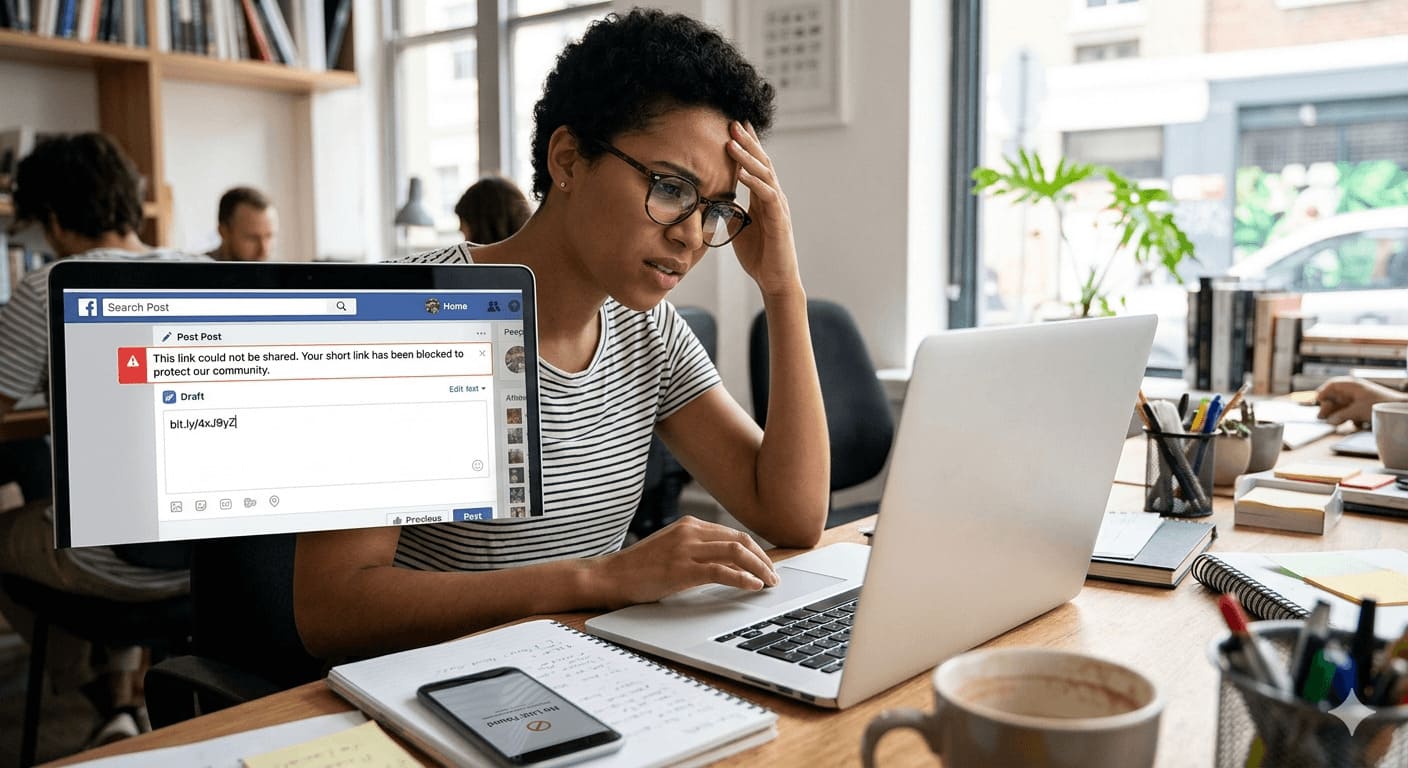
_Image_1.jpg)

.jpg)
.jpg)



.jpg)