_Image_1.png "How to Use UTM Parameters with Short Links (Without Making a Mess of Your Data)")

UTM parameters can get ugly… fast.
You start with a clean link, add a few tracking tags, and suddenly it looks like something broke. Long strings, weird symbols, question marks everywhere. It works, sure—but it doesn’t exactly feel right to share.
And that’s usually where short links come in.
But here’s the thing—most people either use UTM parameters or short links properly… not both together. And when they try, it often turns into a bit of a mess.
So let’s walk through this in a way that actually makes sense. Not overly technical, not overly simplified—just practical.
Why UTM Parameters Matter More Than People Realize
If you’ve ever wondered where your traffic is actually coming from, UTM parameters are the answer.
They tell you things like:
- Which campaign worked
- Which platform performed better
- Which link people clicked
Without them, you’re basically guessing.
And guessing might feel okay at first, but over time it leads to decisions based on assumptions instead of data.
That’s not where you want to be.
The Problem: UTM Links Are Not Exactly User-Friendly
Here’s a typical UTM link:
yourwebsite.com/blog-post?utm_source=facebook&utm_medium=social&utm_campaign=spring_sale
Useful? Yes.
Shareable? Not really.
It looks long, cluttered, and honestly a bit suspicious—especially to someone who doesn’t know what UTM parameters are.
And this is where things get tricky.
Because while you want accurate tracking, you also want people to actually click your link._Image_1.png)
Where Short Links Fix the Problem
Short links solve the visual problem instantly.
You take that long UTM-filled URL and turn it into something like:
yourbrand.link/spring-offer
Same destination. Same tracking. Completely different appearance.
It’s cleaner. Easier to trust. Easier to share.
And more importantly—it doesn’t scare people away.
How UTM Parameters and Short Links Work Together
This is the part that confuses a lot of people, but it’s actually pretty simple once you see it.
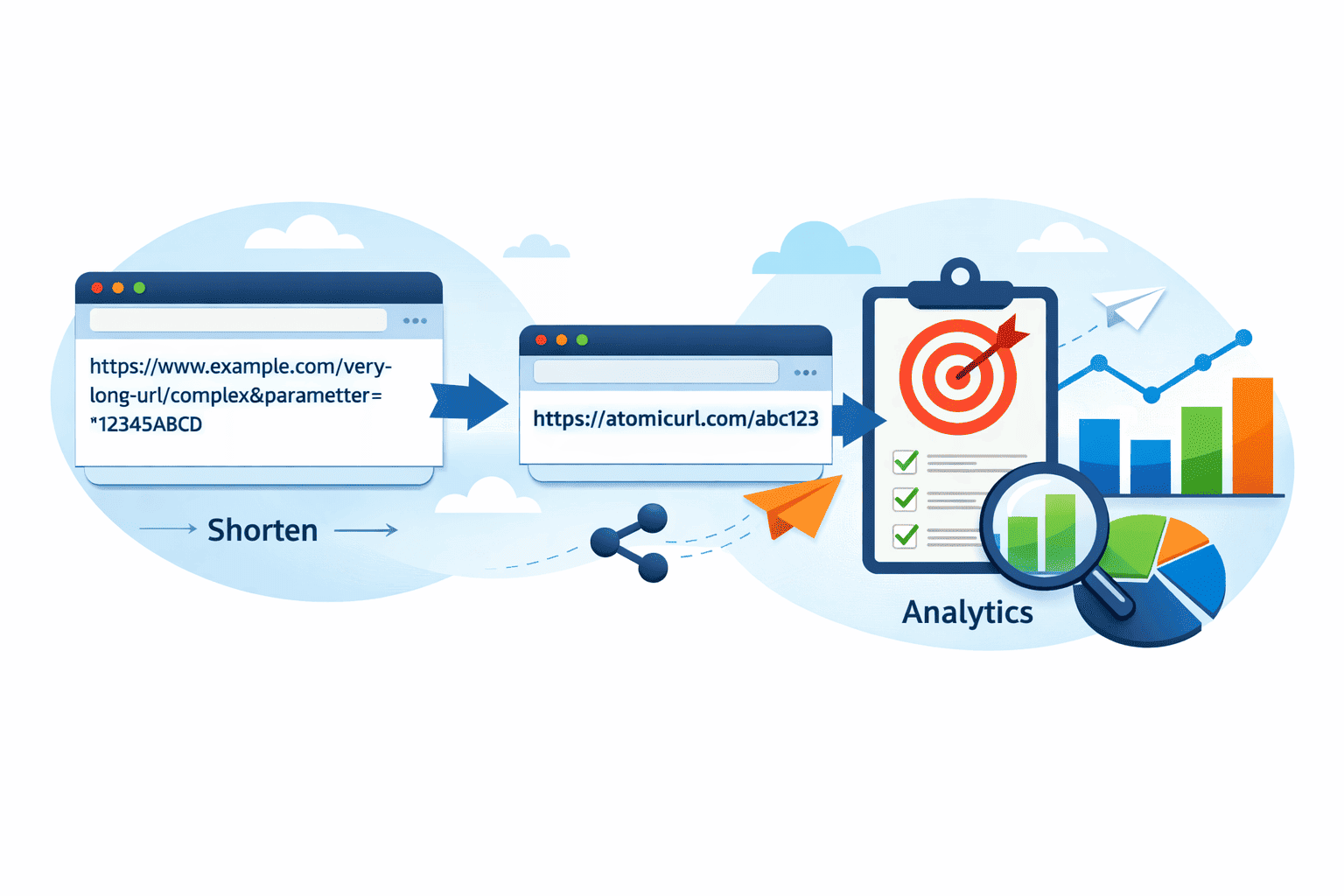
You don’t replace UTM parameters with short links—you wrap them.
Think of it like this:
- You create your full URL with UTM parameters
- Then you shorten that entire URL
- The short link redirects to the full tracked version
So behind the scenes, all your tracking stays intact.
But on the surface, users only see a clean, simple link.
Best of both worlds.
A Practical Example (Because This Helps)
Let’s say you’re running a campaign for a new blog post.
Your tracked URL might look like this:
yourwebsite.com/seo-guide?utm_source=twitter&utm_medium=social&utm_campaign=launch
Now you shorten it:
yourbrand.link/seo-guide
When someone clicks the short link, they’re redirected to the full URL with tracking intact.
You get your data. They get a clean experience.
No compromise.
Where People Usually Get It Wrong
This is where things can fall apart a bit.
One common mistake is creating UTM links inconsistently.
Sometimes it’s utm_source=facebook, other times utm_source=Facebook. It seems minor, but it splits your data.
Suddenly, your reports are messy, and you’re not sure what’s actually working.
Another issue is overcomplicating parameters.
You don’t need ten different tags for every link. That just makes things harder to manage.
Keep it simple. Clear. Consistent._Image_2.png)
Naming Conventions Matter More Than You Think
Here’s something I learned the hard way—naming matters.
If your UTM parameters aren’t consistent, your data becomes confusing very quickly.
For example:
- utm_campaign=spring_sale
- utm_campaign=springsale
- utm_campaign=spring-sale
All technically valid. But now you have three versions of the same campaign.
That’s not helpful.
Pick a format and stick to it. It doesn’t have to be perfect—just consistent.
Short Links Make Tracking Feel Less… Technical
One unexpected benefit of using short links with UTM parameters is how it changes your workflow.
Instead of dealing with long, messy URLs all the time, you work with clean, readable links.
It feels simpler. Less cluttered.
And because of that, you’re more likely to actually use tracking properly instead of skipping it out of frustration.
When to Use This Combination
You don’t need UTM parameters and short links for everything.
But they’re especially useful when:
- Running campaigns
- Sharing links on social media
- Sending email newsletters
- Testing different traffic sources
Basically, anytime you want to understand where clicks are coming from and keep things user-friendly.
A Small but Important Detail
Here’s something people often overlook.
Just because a link is shortened doesn’t mean it should be vague.
yourbrand.link/offer is okay.
yourbrand.link/seo-guide is better.
Clarity still matters.
A short link should be clean and meaningful.
The Balance Between Data and Experience
This whole topic really comes down to balance.
On one side, you have data—tracking, analytics, insights.
On the other side, you have user experience—trust, clarity, simplicity.
UTM parameters give you the data.
Short links improve the experience.
Used together, they solve both problems at once.
A Quick Reality Check
It’s easy to get carried away with tracking.
You start adding more parameters, more variations, more tests.
And before you know it, things become harder to manage than they need to be.
So here’s a simple rule: track what you actually plan to analyze.
If you’re not going to look at the data, there’s no point in collecting it.
What This Looks Like in Real Use
Let’s say you’re promoting a blog post across three platforms:
Instead of one generic link, you create three tracked versions.
Then you shorten each one.
Now you can see exactly which platform performs best—without sharing messy URLs.
And over time, those insights help you make better decisions.
Why This Matters More in 2026
Marketing is becoming more data-driven, but at the same time, users are becoming more cautious.
They don’t click blindly anymore.
That means you need both:
- Clean, trustworthy links
- Accurate tracking behind the scenes
And that’s exactly what combining UTM parameters with short links gives you.
Conclusion
If you’ve ever felt stuck between wanting better tracking and wanting cleaner links, you’re not alone.
UTM parameters can feel messy. Short links can feel limited.
But together, they solve each other’s problems.
You get the data you need without sacrificing the user experience.
And once you get used to that workflow, it becomes second nature.
Nothing complicated. Just a smarter way to handle your links.
FAQs
1. What are UTM parameters used for?
They help track where your website traffic is coming from in marketing campaigns.
2. Can I use UTM parameters with short links?
Yes, you can shorten a URL that already includes UTM parameters.
3. Do short links remove UTM tracking?
No, the tracking remains intact after redirection.
4. How many UTM parameters should I use?
Only the ones you actually need—usually source, medium, and campaign are enough.
5. Are UTM links bad for user experience?
They can be if shared directly, which is why short links help improve readability.
Tags
#UTMTracking #ShortLinks #DigitalMarketing #SEOTips #Analytics #MarketingStrategy #LinkTracking #CampaignTracking #OnlineGrowth #SEO2026
_Image_1.png)
_Image_1.jpg)



_Image_1.jpg)

.jpg)

.jpg)



.jpg)