.png "How to Build a Content Creator Link Strategy (With Short Links)")
Here's something most content creators don't think about until it's too late: every link you share is a decision. Not just about where it points, but about what it says about you, how fast it loads, whether it'll even work six months from now, and whether you can track anything useful from it.
If you're posting links across Instagram, YouTube, LinkedIn, newsletters, and your blog all at the same time, you're not just sharing URLs — you're running a mini distribution operation. And like any operation, how you manage it matters.
This is a piece about building a real link strategy as a content creator. Not the surface-level stuff you've seen a hundred times. The actual thinking behind it, plus a tool that makes the whole thing significantly less painful.
Why Most Creators Don't Think About This (Until It Hurts)
Let's be honest — when you're in the zone creating content, the link feels like an afterthought. You write the post, record the video, design the carousel, and then you paste a raw URL somewhere at the end and call it done. We've all been there.
The problem is that raw URLs are kind of a mess. They're long, they look untrustworthy in some contexts, they don't give you any data, and they break. Like, actually break — old blog posts linking to pages that no longer exist, affiliate links that change without warning, product pages that get 404'd.
And here's what really stings: if you're putting genuine effort into your content, the link is often where that effort either pays off or quietly disappears.
A smart link strategy fixes most of this. Not perfectly, but meaningfully.
What a "Link Strategy" Actually Means for a Creator
It doesn't mean building some elaborate system with twelve tools and a spreadsheet that takes an hour to maintain. It means being intentional about three things:
Where your links go. Is the destination page actually good? Does it load fast on mobile? Is it the right page, or are you sending people to a homepage when you should be sending them to a specific product?
What your links look like. A short, clean URL builds more trust than a 200-character monster with tracking parameters visible to the naked eye. That matters more than people admit.
How your links behave over time. Expiry dates, password protection, one-time links — these aren't just power-user features. They're genuinely useful when you're running a limited campaign, a private resource drop, or a time-sensitive promotion.
The good news is that you don't need a huge budget or technical knowledge to do this well. Tools like AtomicURL handle the heavy lifting in a way that actually fits how creators work — no account required, fast as anything, and surprisingly full-featured.
"Your link isn't just a pathway. It's the last impression between your content and your audience's action."
Building the Strategy: Piece by PieceStart with your link destinations
Before you shorten anything, make sure you're sending people somewhere worth going. This sounds obvious, but you'd be surprised how many creators link to a general homepage when there's a much more relevant page one click deeper. If you're talking about a specific product, link to that product. If you're mentioning a newsletter, link to the signup form, not the archive.
Getting the destination right matters more than any tool you use.
Shorten consistently, not sporadically
One thing creators often do is shorten links sometimes — like, only for social media — but not everywhere. That inconsistency makes it hard to build habits and harder to maintain anything over time.
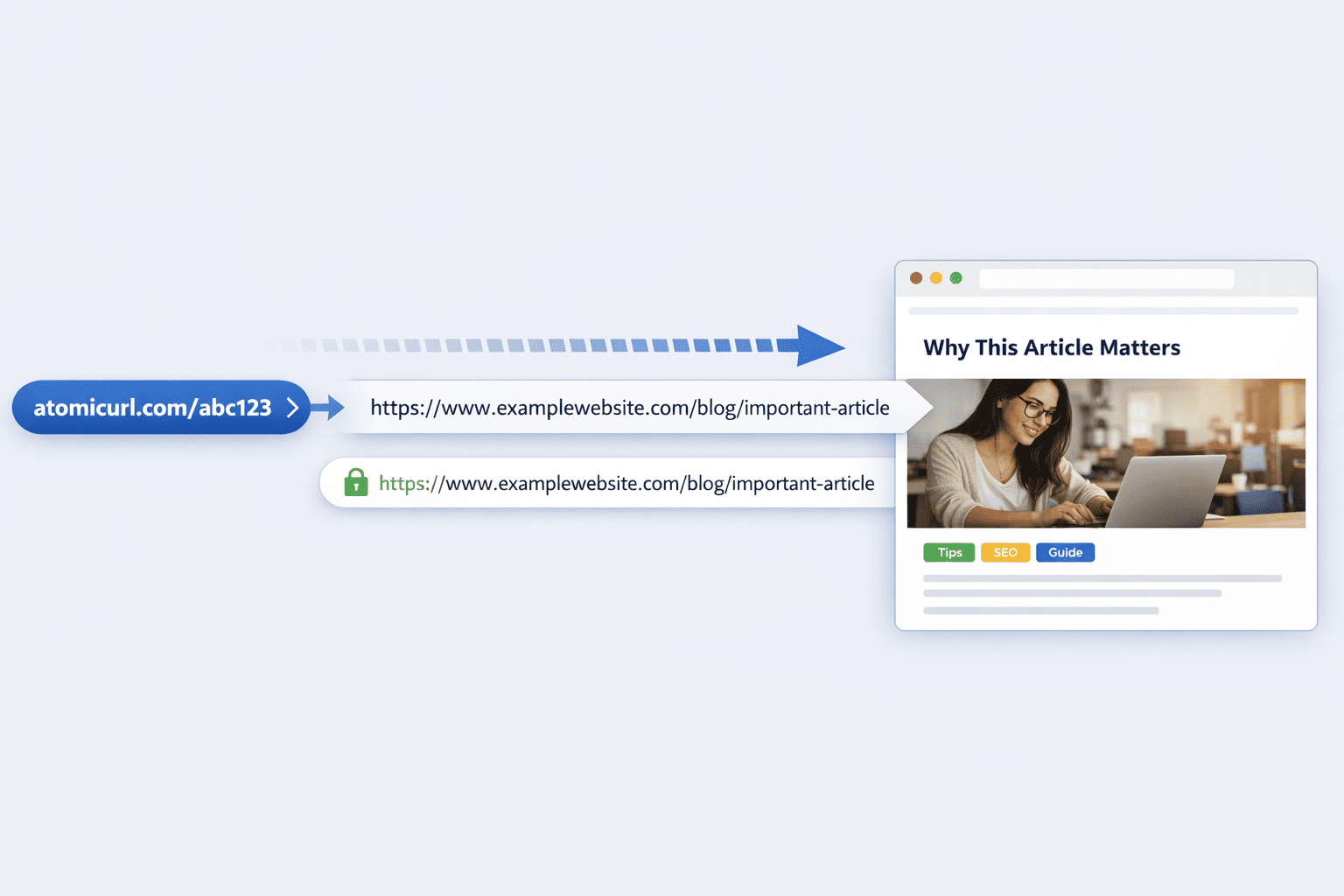
The better approach is to run every link you share publicly through a shortener. Not because short links are magic, but because consistency lets you manage and update them later. And with something like AtomicURL, there's genuinely no friction — it's instant link shortening, no account, no sign-up wall. You land on the page, paste your URL, and you're done. The barrier is basically zero.
Use custom links where it counts
Not every link needs a custom slug. But when you're promoting something specific — a course launch, a collab, a freebie — a customized link like atomicurl.com/YourName-guide looks intentional. It's the kind of detail that separates someone who's building a brand from someone who's just publishing content.
AtomicURL supports customizable links, so you can make short URLs that actually mean something rather than looking like a random string of characters. Small thing, real impact.
Think about what happens after the click
This is where creators leave a lot on the table. There are features in modern link tools that genuinely change how you can use links strategically:
Custom link expiry is great if you're running a time-limited offer. The link just stops working after the deadline. No broken page, no confusion — it expires cleanly. Same goes for click-based expiry, where a link only works a certain number of times. Useful for giveaways, beta access, whatever requires controlled distribution.
Password-protected links let you share something privately without needing a whole membership system. Send the link in a newsletter, add a password, and only the people you've told the password to can access it.
One-time links are exactly what they sound like — after one click, the link goes dark. Perfect for exclusive downloads or anything where you want each person to have their own access.
These aren't gimmicks. They're tools that change the mechanics of how you share things with your audience.
The QR Code Angle (It's More Useful Than You Think)
QR codes feel a bit 2020, but they've stuck around because they genuinely work in specific contexts. If you're at an event, shipping physical products, running a podcast (yes, really — QR codes in podcast show notes for YouTube viewers), or posting anything that might get printed, a QR code attached to your short link is quietly valuable.
AtomicURL lets you generate and download QR codes directly from shortened links. You can drop them into a slide deck, a PDF freebie, a product package, or a Canva template without needing a separate QR tool. It's one of those features where you don't think you'll need it until the moment you suddenly do.
Sharing Across Platforms — The Friction Problem
If you're posting the same link across five different platforms, copy-pasting from a notes app or your browser bar every time is genuinely tedious. Not dramatically so, but it adds up and creates room for error.
Quick-share buttons built into your link tool make this smoother. AtomicURL includes share buttons for various social media platforms directly on the page after you shorten a URL. One click to share to Twitter, LinkedIn, wherever. It's the kind of thing that saves you about thirty seconds each time, which adds up to actual time savings over a month.
And with one-click copy, getting the shortened URL itself onto your clipboard takes literally one tap. No selecting text, no right-clicking. Just copy and paste into whatever you're working on.
When You're Managing a Lot of Links
This is where things get interesting for more established creators. If you're running campaigns across multiple platforms, managing affiliate partnerships, or just maintaining a big content library, you're dealing with a lot of URLs. Handling them one at a time stops making sense pretty quickly.
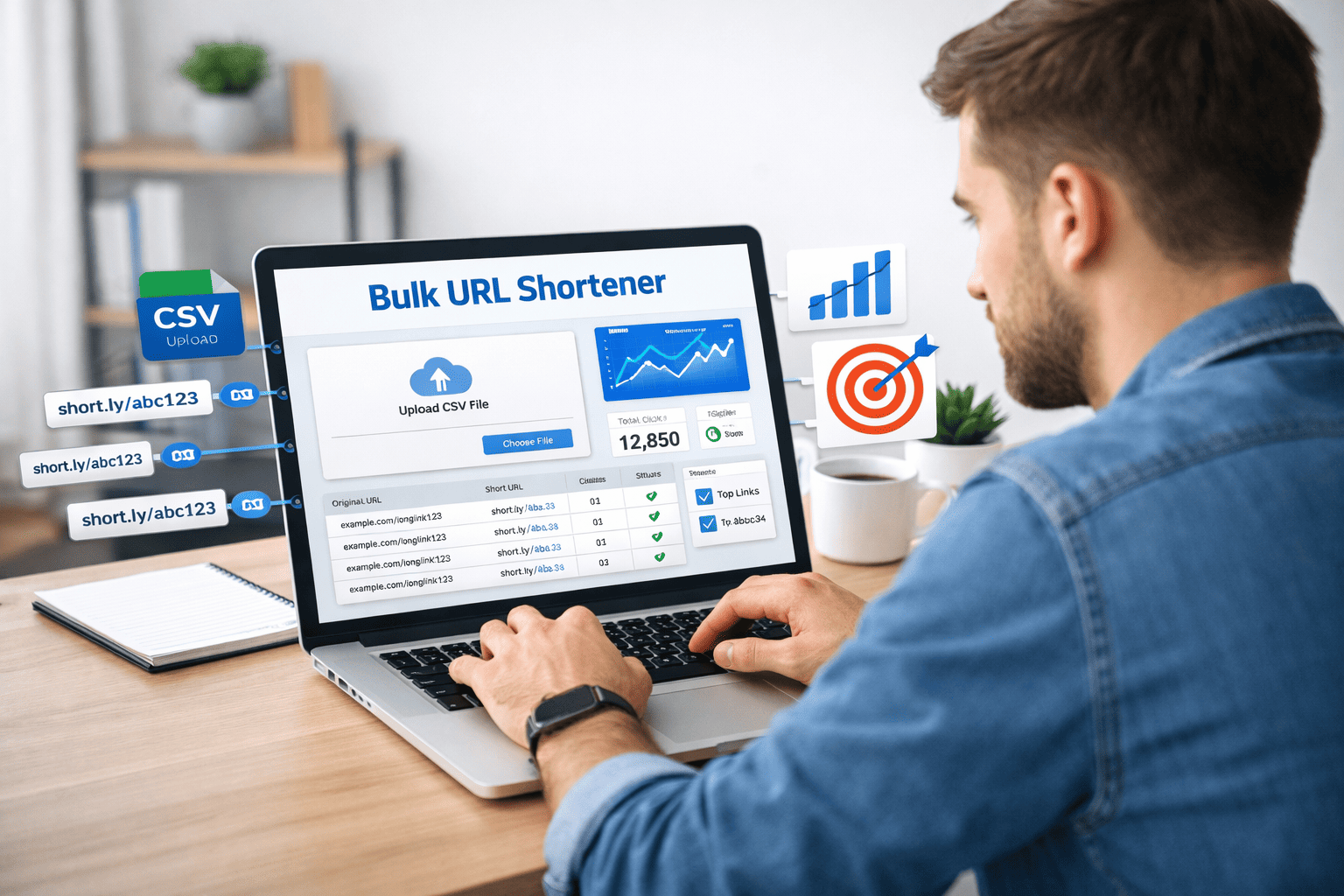
The bulk URL shortener in AtomicURL handles up to 50 URLs at once. You paste them all in, shorten them in one go, and then — and this part matters — export the results as a CSV file. Which means you have a clean record of what was shortened to what, timestamps included, in a format you can drop into a spreadsheet or share with a team member.
For anyone running a newsletter with multiple links per issue, or an affiliate blogger managing dozens of product links, this alone is worth the time it takes to learn the tool. And the learning curve is basically flat — it's easy to use in the genuine sense of that phrase, not the "easy once you've read the documentation" sense.
No sign-up requiredInstant link shorteningCustomizable linksOne-click copyGenerate & download QR codesQuick-share social buttonsBulk shortening (50 URLs)Export as CSVUnlimited linksLightning-fast redirectionCustom link expiryPassword-protected linksClick-based expiryOne-time linksReliable performance
Performance Actually Matters
Here's something that gets overlooked: slow link redirects are a real thing. If you're sending someone through a shortened URL that takes two full seconds to redirect them, you're adding friction at the exact moment when you need things to flow smoothly. Someone clicking a link from Instagram is already in a low-patience mode. A sluggish redirect is genuinely annoying.
AtomicURL is built around lightning-fast redirection and reliable performance. Which sounds like marketing language, but in practice it means your audience doesn't notice the link at all — they click, and they arrive. That's the whole point. You want the link to be invisible, functionally speaking.
And since there's no limit on how many links you can create, you don't have to make decisions about which links "deserve" to be shortened. Just shorten everything. Build the habit, keep things consistent.
Putting It Together: What a Real Creator Setup Looks Like
Say you're a content creator who publishes YouTube videos, writes a weekly newsletter, and posts on Instagram and LinkedIn. Here's roughly how a link strategy could work in practice:
Every time you publish a video, you create a short link for it — custom slug if it's a series or something you're actively promoting. That same link gets dropped into your newsletter, your Instagram bio (or story), and your LinkedIn posts. One URL, tracked, consistent across all platforms.
When you launch something limited — a workshop, a resource pack, a collab offer — you set a link expiry so it automatically becomes unavailable after the deadline. No manual cleanup. No awkward "this offer has ended" redirects. It just expires.
At the end of each month, you export your links as a CSV, scan which ones got used, clean out the old ones, and have a tidy record for your own reference. Maybe fifteen minutes of work, total.
QR code for your media kit and any printed materials. Bulk shortening when you're doing a round of link updates on old posts. Password-protected link for your subscriber-only download. It's not complicated — it's just intentional.
Ready to clean up your links?
Start shortening for free — no account, no signup, just fast and reliable link shortening built for creators.
The Honest Takeaway
Link strategy isn't glamorous. Nobody's writing viral threads about their URL management habits. But it's one of those foundational things — like having a consistent posting schedule or keeping your SEO basics in order — that compounds quietly over time.
When you stop treating links as throwaway afterthoughts and start treating them as small but real parts of your brand infrastructure, things tighten up. Your content looks more professional. Your campaigns become more manageable. Your audience has a better experience, even if they never consciously notice why.
And the cost of doing this well is genuinely low now. AtomicURL is free to use, requires no account, and covers pretty much everything a working creator needs — from instant shortening to bulk exports to those advanced features like one-time links and password protection that feel small until the moment you actually need them.
Start with one thing: shorten your next link before you share it. See how it feels. Go from there.
Tags
#ContentCreator #LinkStrategy #ShortLinks #URLShortener #AtomicURL #ContentMarketing #CreatorTools #DigitalMarketing #QRCode #LinkManagement #BloggingTips #SEO #AffiliateMarketing #SocialMediaMarketing #ContentStrategy #OnlineCreators #SmallBusinessMarketing #BulkURLShortener #CustomLinks #CreatorEconomy
_Image_2.jpg)