
Most e-commerce stores are leaving money on the table — not because their products are bad, but because the way they share links is quietly killing conversions before a single page even loads.
Think about that for a second. You spend hours writing a product description, designing a promotion, setting up an email sequence — and then you paste a raw, untracked, 180-character URL into all of it. The link works, technically. But it's ugly, it's unmanageable, and you have no real idea what's happening after someone clicks it.
Short links fix that. And if you're running any kind of online store — whether it's a small Shopify shop or a mid-size marketplace with dozens of SKUs — understanding how to use them strategically can actually shift how your campaigns perform.
The Real Problem With Long URLs in E-Commerce
Here's the thing about product URLs from major e-commerce platforms: they're built for databases, not humans. They contain category slugs, tracking parameters, variant IDs, and session tokens that make them look like encrypted government documents. Nobody willingly types one.
More importantly, nobody trusts one at a glance.
When a potential buyer sees a link that's 15 words long with a bunch of symbols and numbers, there's a tiny hesitation. It's subconscious, but it's there. That hesitation is a micro-friction point — and in e-commerce, every micro-friction point costs you conversions.
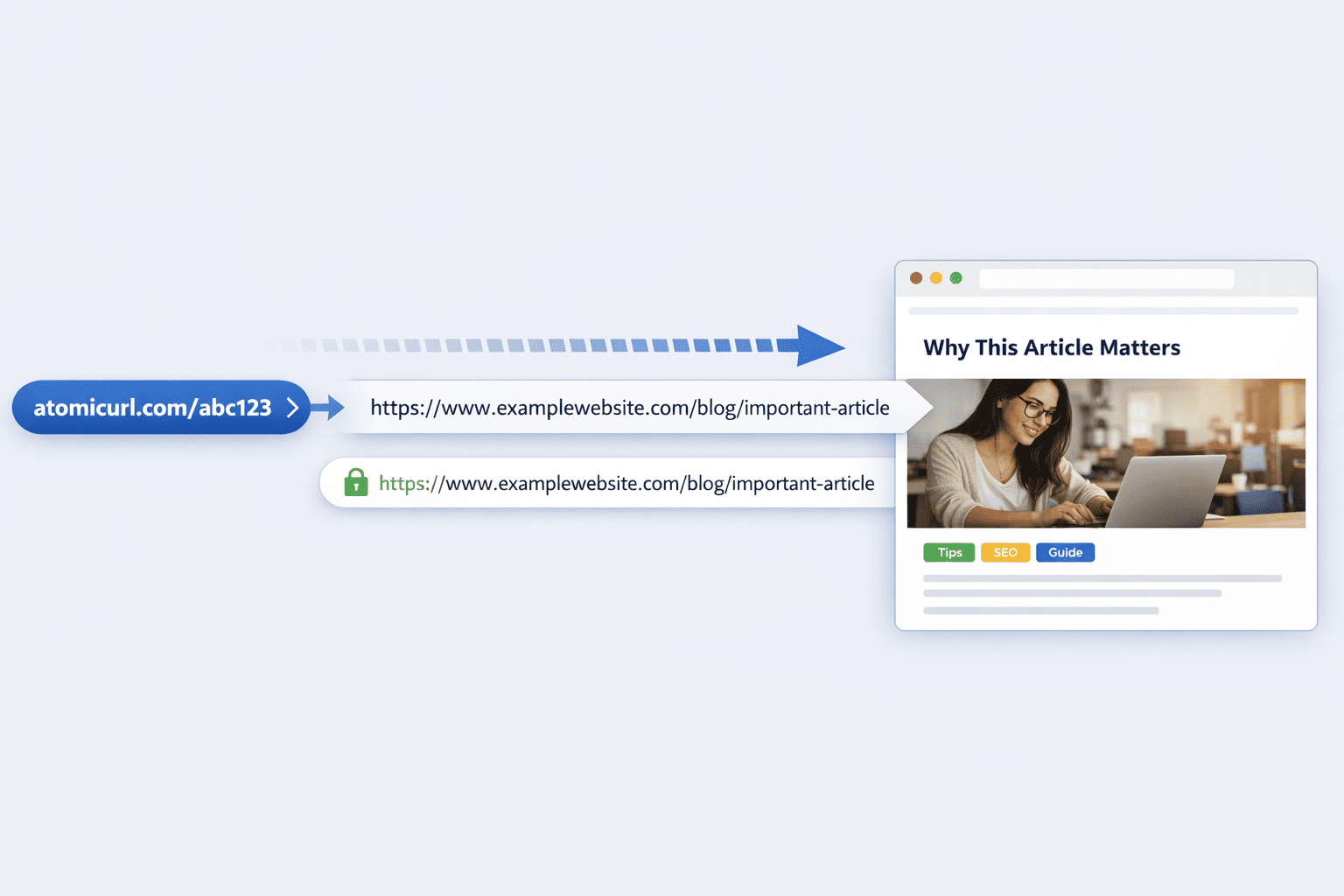
Short links remove that hesitation. A clean, readable link that reflects what it leads to — something like atomicurl.com/summer-sale — signals that someone actually thought about this. And buyers respond to that, even if they don't consciously realize it.
Where AtomicURL Actually Fits Into This
There are a lot of link shorteners around. Most of them fall into two categories: free tools that are bare-bones and clunky, or paid platforms that want you to commit to a monthly subscription before you've even decided if you like them.
AtomicURL sits in neither of those camps. No sign-up required — you land on the page, paste your product URL, and you have a short link in seconds. That's genuinely useful when you're in the middle of scheduling an Instagram post and realize the link you have looks like a disaster.
But the real value isn't just speed — it's the combination of features that actually support how e-commerce campaigns work in the real world.
Customizable Links and Why They're Worth Using
Let's say you're running a flash sale on skincare bundles. You could share atomicurl.com/xk39mq — which works fine — or you could take thirty extra seconds and create atomicurl.com/skincare-flash. The second one is readable in a caption, speakable on a podcast ad, scannable on a product insert, and memorable enough that a customer might actually type it later.
Customizable links change how your brand comes across. They make your links feel deliberate. And in a crowded ad feed where everything is fighting for attention, deliberate wins.
Campaign Tracking: The Part Most Sellers Overlook
Here's where short links start doing heavier lifting. When you're running campaigns across multiple channels — email, Instagram, Facebook, influencer posts, Google Ads — you need to know which channel is actually driving traffic and sales.
If you're using the same URL everywhere, you can't tell. Was that spike in traffic from the email you sent Tuesday or the Instagram Story you posted Wednesday? No idea.
Short links let you create channel-specific URLs for the same product page. One link for email, one for Instagram, one for your Facebook ad. Each one takes buyers to the same place, but you can track which source is converting. That data shapes your next campaign. It tells you where to double down and where to cut spending.
The URL manager at AtomicURL is where this becomes practical. You can manage all your campaign links in one place — custom slugs, expiry settings, and access controls — without losing track of what's live and what isn't.
Bulk Shortening for Stores with a Lot of SKUs
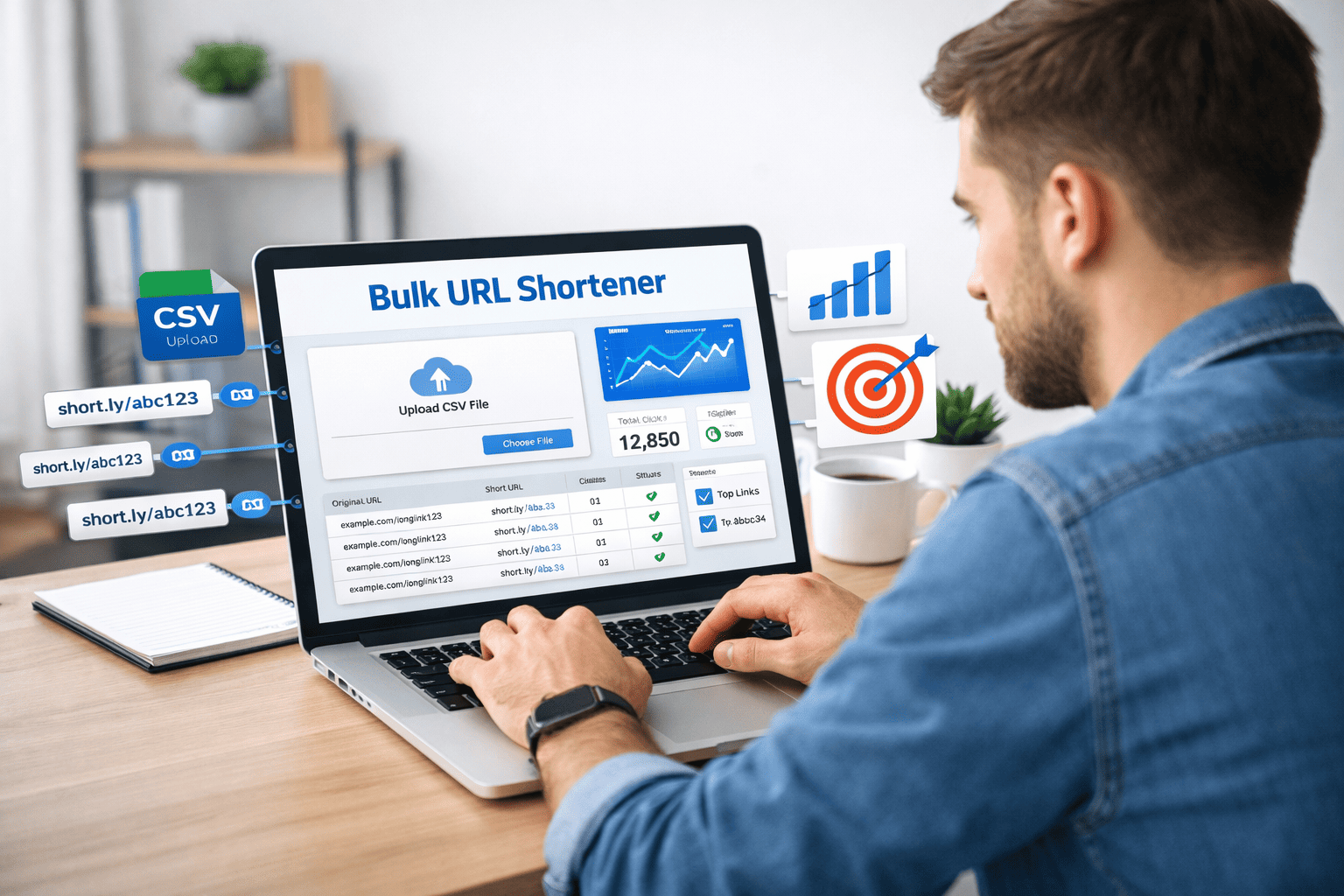
If you're managing a store with dozens or hundreds of products, doing this one link at a time would be maddening. The bulk URL shortener lets you shorten up to 50 URLs simultaneously. Paste them in, shorten them all, export the results as a CSV file, and drop that into your content calendar, your email tool, or hand it off to your team.
For seasonal campaigns especially — Black Friday, end-of-year sales, new collection launches — this is a real workflow upgrade. You're not spending three hours creating individual links for 40 products. You're spending five minutes.
The CSV export is something I don't think enough people appreciate. It means your link library is portable. You can share it with a VA, import it into a spreadsheet where your campaign tracker lives, or use it as the source for automated email personalization. That's actual campaign infrastructure, not just a convenience feature.
QR Codes: Not Dead, Just Underused
There was a period where QR codes felt like a failed experiment. Now they're everywhere again, and for good reason — smartphones made scanning second nature. For e-commerce sellers, this matters more than most people think.
If you sell physical products, your packaging is a marketing surface. A QR code on a box insert that leads to a reorder page, a loyalty program, or an exclusive customer-only discount is a genuinely smart move. AtomicURL generates and lets you download QR codes for any shortened link. You get the QR code, you drop it into your packaging design, and suddenly your physical product is driving digital traffic.
It works for pop-up shops, trade shows, printed ads, and even product photography. Any place where someone might be looking at your product but isn't already in a browser.
The Campaign Control Features That E-Commerce Sellers Specifically Need
This is where things get interesting. Most link shorteners just... shorten links. AtomicURL has a set of features that give you real control over the links you share — and for e-commerce, that control is genuinely valuable.
Custom link expiry is the most obvious one. Running a 48-hour flash sale? Set the link to expire at the same time the sale ends. No more customers clicking an old deal link two weeks later and getting confused when the price is wrong. The link expires, the chaos doesn't happen.
Click-based expiry is a bit more nuanced but really useful for limited-offer campaigns. You can set a link to stop working after a set number of clicks. Running an exclusive deal for the first 100 customers? Create a link that deactivates itself at 100 clicks. It's scarcity built directly into the URL.
One-time links take this further still. They work exactly once and then they're done. If you're sharing an exclusive preview of an unreleased product with a specific journalist or influencer, a one-time link means they're the only one who gets to see that page through that specific link. It doesn't get forwarded and used by 50 people who weren't supposed to have access yet.
And then password-protected links — useful for wholesale pages, VIP buyer portals, or B2B catalog links that you don't want floating around publicly. Add a password, and only people you've specifically told the password to can access what's behind the link.
These aren't gimmicks. They're real campaign control tools that e-commerce businesses actually need and most link shorteners don't offer.
Sharing: The Part That Has to Be Fast
Quick-share buttons for social media platforms are one of those features that sound minor until you're working fast. When you're managing campaigns across Facebook, Twitter, WhatsApp, LinkedIn, and everywhere else, having one-click share options for each platform saves real time. You're not copying, switching apps, pasting, adding context. You click, you share, you move on.
One-click copy works the same way. You shorten the link, you tap copy, it's in your clipboard. No selecting, no highlighting, no right-clicking. In the rhythm of a busy workday, that's actually noticeable.
Instant link shortening means there's no processing delay. You're not watching a spinner. The link is ready the moment you hit shorten. For someone managing campaigns in real time — adjusting on the fly during a live sale — that responsiveness matters.
Verifying Links Before They Go Out
One underappreciated step in e-commerce campaign management: verifying that links actually lead where you think they lead. Especially if you're working with affiliate links, redirect chains, or URLs that your platform generates automatically.
The URL expander tool reveals the full destination of any shortened link. Before you paste a link into a campaign that's going to 50,000 email subscribers, it's worth thirty seconds to confirm it goes exactly where you intended. Not a redirect that's one step removed. Not a variant page that's out of stock. The actual right URL.
It's the kind of check that feels overly cautious right up until the moment it saves you from a campaign disaster.
Putting It All Together in a Real Campaign
Let's run through what this actually looks like in practice.
You're launching a new product line next Thursday. Here's the workflow:
You create the product pages on your store. You head to AtomicURL — no login, no friction — and bulk shorten all your product URLs at once. You customize the slugs to match the product names. You export the CSV and drop it into your campaign planning sheet.
You create separate links for each channel: email, Instagram bio, Facebook ad, influencer partnership. Each link points to the same product page but is tracked separately. You set expiry dates to align with your launch window. You download QR codes for the in-store display you're running simultaneously.
You share the links using the quick-share buttons as content goes live. You watch which channels are driving traffic. You adjust spend toward what's working.
After the launch window closes, the expiry dates kick in and the links deactivate automatically. No stale links floating around. No customer confusion. Clean.
That's not hypothetical. That's a normal campaign workflow — made significantly cleaner by using short links thoughtfully instead of just functionally.
A Closing Thought
The gap between e-commerce stores that grow steadily and ones that plateau often isn't about product quality or pricing. It's about the details — the friction points that add up across the customer journey and quietly suppress conversions.
Short links are one of those details. They're not glamorous. They don't have a flashy ROI dashboard attached to them. But they make your links cleaner, your campaigns more trackable, and your sharing faster. And every one of those things feeds into results.
AtomicURL makes this genuinely easy — no account, no commitment, unlimited links, and a set of campaign-focused features that go well beyond what basic shorteners offer. If you haven't started using short links across your e-commerce marketing, start now. Start with one campaign. You'll notice the difference quickly enough that you won't go back.
Tags
#ECommerce #ShortLinks #URLShortener #AtomicURL #ECommerceMarketing #CampaignTracking #DigitalMarketing #OnlineSales #LinkManagement #QRCodeMarketing #SalesStrategy #MarketingTools #EmailMarketing #ShopifyMarketing #ConversionOptimization
_Image_2.jpg)






.png)