
You get a link in a message. It's short, clean, completely unrecognizable. Something like bit.ly/3xKpQ7z. And for a split second—maybe longer—you genuinely have no idea where that link is going to take you. That small moment of uncertainty? It happens to everyone, probably dozens of times a week. And that's exactly where a URL expander comes in.
Most people have never heard the term, honestly. But they've absolutely felt the problem it solves. A URL expander is a tool that takes a shortened or masked link and reveals the actual, full destination URL before you click on it. That's the simple version. But the fuller picture is a bit more interesting than that.
The problem with short links (and why they exist in the first place)
Short links were invented for good reasons. Platforms like Twitter—back when character limits mattered more—made long URLs genuinely unusable. Print ads couldn't contain 200-character URLs. Email marketers wanted cleaner, trackable links. Sharing a link to a specific section of a long article used to look like a disaster in text messages.
So services like Bitly, TinyURL, Rebrandly, and dozens of others filled that gap. You'd paste in a long URL, get a short one back, share it confidently. It made the web feel a little cleaner. More shareable. Fine.
But then came the obvious flip side. If anyone can shorten any link to look like anything, how do you know where you're actually going? Malicious links, phishing attempts, redirects to fake login pages, sketchy affiliate tracking chains—all of these look exactly the same as a perfectly innocent link when they're shortened. There's no visual difference between a link to a helpful article and a link to a credential-harvesting page.
That's the thing nobody talks about enough—URL shorteners solved a presentation problem and accidentally created a trust problem.
So what does a URL expander actually do?
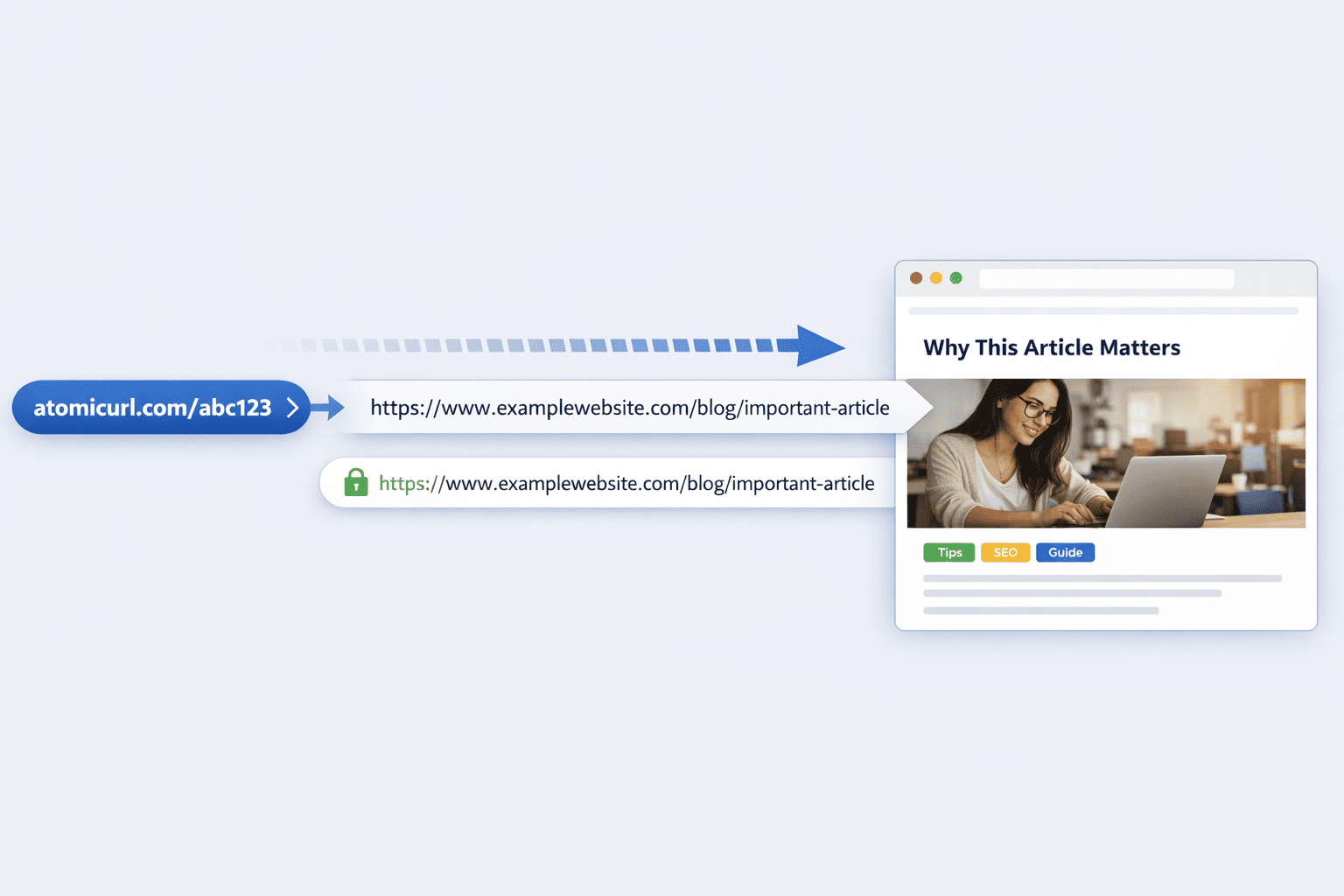
A URL expander reverses the shortening process. You paste in that cryptic short link, and the tool follows all the redirect chains to reveal where the URL actually points. Not where it claims to go. Not where the text says it goes. Where it actually goes.
Some expanders stop at the first destination. Better ones—like the one over at AtomicURL's URL expander—follow the full redirect chain, so if a link bounces through three different servers before landing on a final page, you'll see all of that. That matters more than most people realize, because layered redirects are a surprisingly common technique in phishing and affiliate scam setups.
Beyond just showing the destination, some expanders also give you metadata—page titles, domain registration details, whether the domain is flagged anywhere as suspicious. It's not a complete security audit, but it gives you enough to make a judgment call before you're already on the other side of a bad click.
When should you actually use one?
Let's be honest—you're not going to run every single link through an expander every time. That's not realistic. But there are specific situations where it really does make sense to pause and check.
The most obvious one is when a link arrives somewhere unexpected. An email from a sender you vaguely recognize but can't quite place. A DM from a social media account that followed you last week. A forum post where someone's "helpful resource" is suspiciously short. These are exactly the moments where thirty seconds with a URL expander can save you from an hour of dealing with a compromised account or worse.
Social media is another big one. Shortened links are everywhere on platforms like X, Instagram bios, and LinkedIn posts. Most are totally fine. But some aren't. When a link is tied to a financial offer, a login prompt, a software download, or anything else that involves your credentials or your money—check it first. The two seconds it takes is worth it.
Quick example: A tweet promises "a free tool that auto-generates SEO reports." The link is shortened. You run it through an expander and see it redirects to a third-party domain with a weird extension that's two weeks old. You just saved yourself from downloading something you definitely didn't want.
Marketers and SEO folks have a different use case entirely. If you're auditing a site's backlink profile or checking what a competitor's short link campaign is actually pointing to, a URL expander is part of the toolkit. Affiliate link tracking, redirect chain analysis, checking whether a client's old campaign links still resolve correctly—these are practical professional tasks, not paranoia.
There's also the content research angle. If you're writing an article and you want to cite something, but the link you found is shortened and you can't tell where it actually lives, expanding it lets you see whether the original source is credible before you quote it. This is a small thing but it matters for accuracy.
Is it about fear, or just awareness?
This is worth addressing because there's a version of this conversation that tips into paranoia territory, and that's not the goal. Most shortened links are completely harmless. Most of the time you click something, nothing bad happens. The internet isn't entirely made of traps.
But being aware that a shortened link is opaque—that you genuinely can't see where it goes from looking at it—is just basic digital literacy at this point. It's not fear. It's the same logic as looking both ways before crossing a street. Usually it's fine. You still look.
Using a URL expander occasionally, in the right situations, is a small habit that requires almost no effort. Tools like the one at atomicurl.com/url-expander are free, quick, and don't require any login or setup. You paste the link, you get the full destination. That's it.
A few things worth knowing about redirect chains
One thing that genuinely surprised me when I started paying attention to this—links don't always redirect once. Sometimes they redirect four or five times. A short link might go to a tracking server, which passes to an analytics platform, which then hands off to the actual destination. This isn't inherently malicious; it's actually pretty common in marketing campaigns. But it does mean the "first stop" isn't always the final one.
This is why a good URL expander follows the full chain rather than just showing you the first hop. If you're only seeing step one, you're not seeing the whole picture. And the final destination is what actually matters.
It's also worth knowing that some links are designed to behave differently depending on where they think you're coming from. Geographic redirects, device-based redirects, time-limited links that expire and redirect somewhere else—these exist. A URL expander won't catch all of that, but it'll catch most of it under normal conditions.
The broader point about link transparency
We've built a web that runs heavily on trust. You click links because you trust the person who sent them, or the platform they appeared on, or just because you've gotten used to things usually being fine. That trust is generally well-placed. But it's also something that bad actors specifically try to exploit.
A URL expander is one of those tools that doesn't ask you to change your behavior dramatically. It doesn't require you to become a cybersecurity expert or paranoid about every interaction online. It just gives you the option to verify before you commit—a short moment to look before you step.
And in situations where something feels off—where a link arrives in an unexpected context, comes from someone you don't fully recognize, or promises something a little too conveniently—that option is genuinely valuable. The tools to use it are free and fast. There's no real reason not to.
If you haven't bookmarked a URL expander yet, this is probably the right time. Keep one in your toolbar or browser bookmarks. You won't use it every day. But when you do need it, you'll be glad it took you about fifteen seconds to set up. AtomicURL's expander at atomicurl.com/url-expander is a clean, no-frills option worth having on hand. Paste a link, see the full destination, decide whether to proceed. That's genuinely all there is to it.
Small habit. Real value. Not complicated.
Tags
#URLExpander #URLShortener #CyberSecurity #OnlineSafety #SEOTools #DigitalMarketing #PhishingProtection #LinkSafety #WebTools #URLTracking #RedirectChain #InternetSafety #ContentMarketing #SEO #TechTips #ClickSafety #SmallBizMarketing #AffiliateMarketing #MalwareProtection #AtomicURL

_Image_2.jpg)






.png)