
You just finished a design in Adobe Express, exported a PDF from Acrobat, or put together a portfolio in Behance — and now you need to share it. What you end up with is a digital spaghetti string—long, twisted, and unmistakably auto‑generated. There's a better way to share your creative work.
When I first launched AtomicURL, I realized how much a messy link can ruin the vibe of a polished portfolio. Adobe’s URL shortener steps in as a creative ally—it trims the clutter so your work shines without distraction. Whether you’re sharing a Behance project, a client presentation, or a quick Instagram campaign, here are seven smart ways I’ve found to keep links short, stylish, and click‑worthy.
Adobe's ecosystem is enormous. Between Acrobat, Creative Cloud, Express, Behance, Adobe Fonts, and Stock — creative professionals are generating and sharing links constantly. And most of those links are anything but clean.
Whether you're sending a PDF proof to a client, sharing a design mockup with a collaborator, or linking to your portfolio in an email signature — the link itself is part of the presentation. A messy URL quietly chips away at the professional image you've worked hard to build.
This post covers seven practical ways to use an Adobe URL shortener, why it's worth building into your workflow, and the mistakes that trip people up along the way.
What Is an Adobe URL Shortener?
An Adobe URL shortener isn't a product made by Adobe — it's simply a URL shortening tool used to compress the long, unwieldy links that Adobe's various platforms generate.
When you share a file from Adobe Acrobat, a project from Creative Cloud, or a profile from Behance, the resulting URL can easily exceed 100 characters. A URL shortener takes that full address and converts it into something compact and shareable.
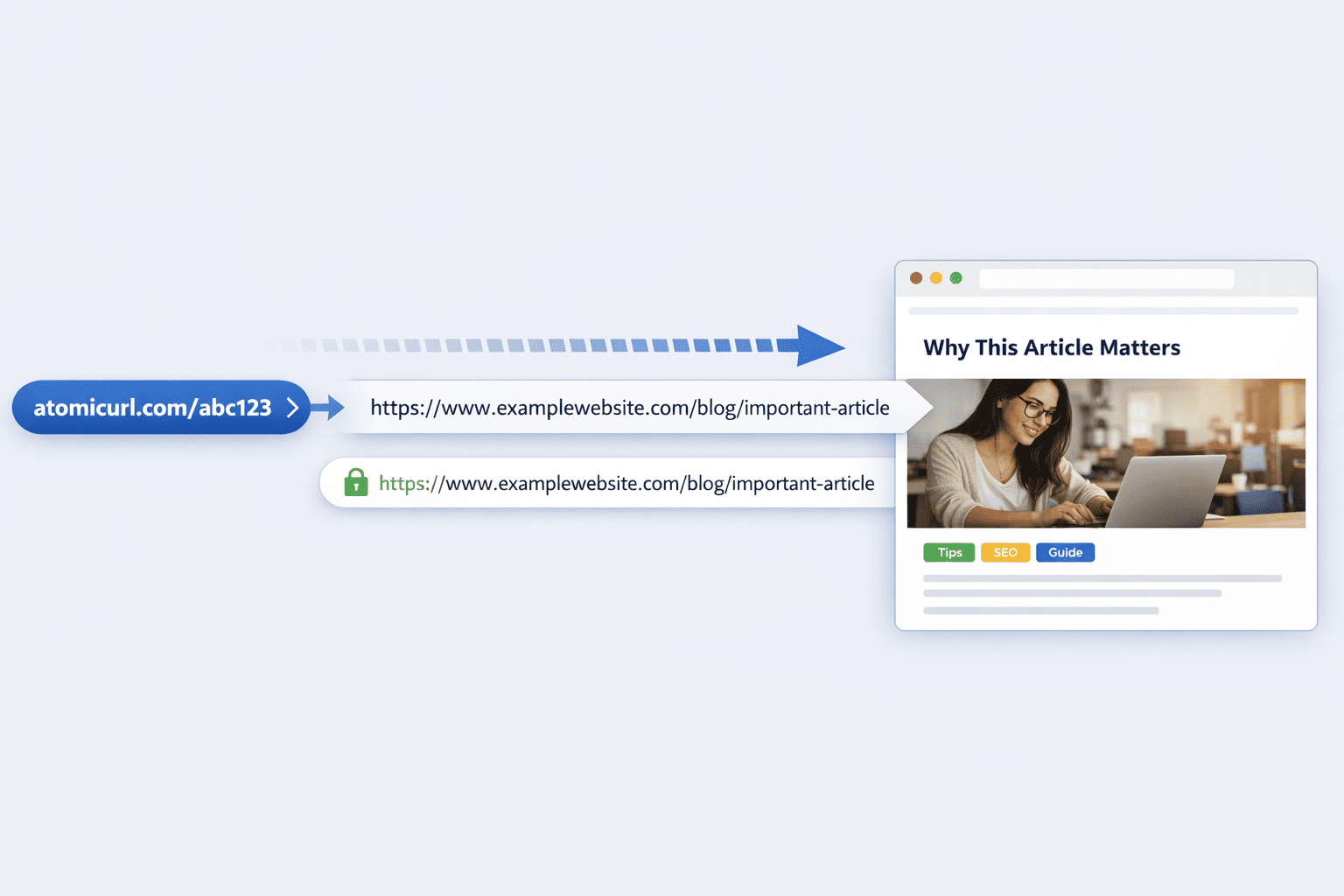
Before shortening:
https://acrobat.adobe.com/id/urn:aaid:sc:AP:a1b2c3d4-e5f6-7890-abcd-ef1234567890
After shortening:
https://atomicurl.com/xyz789
Same file. Same access. A fraction of the characters — and a much cleaner experience for whoever receives it.
It's worth noting: Adobe did briefly offer its own link shortening through Adobe.ly (which was discontinued). Most creatives now rely on third-party shorteners for this, which actually gives you more flexibility anyway.
Why It Matters for Creative Professionals
Most designers, marketers, and freelancers underestimate how much the way a link looks affects how it's received. Here's why it actually matters:
- Client impressions: Sending a client a 120-character Acrobat URL in a proposal doesn't look polished. A short, clean link does.
- Email formatting: Long URLs frequently break across two lines in plain-text emails or get flagged by spam filters. Short links behave cleanly.
- Portfolio sharing: A compact link to your Behance or Creative Cloud portfolio is far easier to include in a resume, LinkedIn bio, or business card.
- Campaign tracking: If you're sending the same Adobe Express asset to multiple channels, different short links per channel let you track where engagement is actually coming from.
- Verbal sharing: In a video call or presentation, you might say "visit this link" — a short URL is something people can actually remember and type.
None of this is theory. These are the small friction points that add up across dozens of client touchpoints every month.
7 Smart Ways to Use a Link Shortener with Adobe Tools1. Sharing Adobe Acrobat PDF Reviews
When you send a PDF for client review via Acrobat, the share link is long and forgettable. Shorten it before dropping it into an email or Slack message. It looks cleaner and is less likely to break in certain email clients.
2. Linking to Creative Cloud Shared Assets
Creative Cloud lets you share libraries, fonts, and assets with collaborators. Those share links are verbose. A shortened version is much easier to pass along in a brief, especially to clients or stakeholders who aren't designers themselves.
3. Your Behance Portfolio in Bios and Resumes
A Behance profile URL can include your full name, a trailing slash, and various parameters. Compress it before putting it in your LinkedIn headline, Twitter bio, or email signature. It instantly looks more intentional.
4. Adobe Express Campaign Assets
If you're a marketer or small business owner using Adobe Express to create social graphics or banners, you might share the asset link internally for approval. Short links make that back-and-forth cleaner and easier to track.
5. Freelance Proposals and Client Decks
When presenting a pitch or proposal, any link you include should look deliberate — not auto-generated. A clean short link to a shared PDF or portfolio project signals attention to detail before the client has even opened the file.
6. Adobe Stock or Font References
When collaborating with a non-designer — say, a copywriter or project manager — and you want to point them to a specific Adobe Stock image or font pairing, a short link removes the clutter and makes the reference easy to open on any device.
7. Workshop and Course Materials
Design educators and creative coaches often share links to Adobe tutorials, resource pages, or course assets. Shortened links are easier to include in slide decks, PDFs, and worksheets — especially when students need to type them manually.
How to Shorten an Adobe Link: Step-by-Step
There's no software to install and no account required. Here's the full process:
- Open the Adobe app you're working in — Acrobat, Creative Cloud, Behance, Express, etc. Generate your share link using the platform's built-in share function.
- Copy the full URL to your clipboard.
- Go to atomicurl.com and paste the link into the input field on the homepage.
- Click shorten. Your compact link is generated instantly — no signup, no email confirmation, no waiting.
- Copy the short link and paste it wherever you need it — email, proposal, bio, slide deck, or message.
If you're regularly sharing multiple Adobe assets — say, individual files from a project set — the bulk URL shortener lets you compress several links in one go, which saves real time on larger projects.
Common Mistakes and Misconceptions
✕
Thinking Adobe still has its own shortener
Adobe.ly was discontinued years ago. If you've been searching for a native Adobe link shortening feature, it no longer exists. You'll need a third-party tool, which is perfectly fine — and often more flexible.
✕
Using the same short link across every channel
If you're sending a Behance portfolio link to five different places, use five different short links. Otherwise you'll never know which channel is actually driving views. It takes an extra minute and gives you genuinely useful data.
✕
Shortening a link and never testing it
Always click your own short link after creating it. Adobe share links sometimes require specific permissions or expire after a set time. The worst time to discover that is after you've already sent it to a client.
✕
Assuming short links look untrustworthy
Some people worry that clients won't click a shortened link. In practice, the opposite is often true — a clean, short link looks more intentional than a 100-character Acrobat URL full of hashes and tokens. Context matters too: if it's in a professional email, recipients click.
✕
Not checking the destination before sharing
If you're ever on the receiving end of a short link you didn't create, it's reasonable to want to verify where it leads. The URL expander lets you preview a shortened link's destination before clicking — useful when you're unsure of the source.
How AtomicURL Fits Into a Creative Workflow
AtomicURL is a free URL shortener — no account needed, no trial, no paywall on core features. You paste a link, get a short one, and move on. For creatives who are already managing tools, subscriptions, and deadlines, that simplicity is the point.
A few things that make it practical for Adobe-heavy workflows:
- The bulk shortener is useful when you're delivering a project with multiple deliverable links — individual PDFs, asset files, or review links — and need all of them compressed at once.
- The URL manager keeps your shortened links organized, so you're not hunting through old emails trying to find what you sent to which client.
- There's no account wall between you and a working short link. Open the site, shorten the link, done.
It's not trying to replace your project management stack. It just handles one specific thing — link shortening — without adding friction to your day.
Frequently Asked Questions
Does Adobe have its own URL shortener?
Adobe previously offered Adobe.ly as a link shortening service, but it has since been discontinued. There is no native URL shortening feature built into Adobe's current products. Creatives now use third-party shorteners for this purpose.
Can I shorten an Adobe Acrobat share link for free?
Yes. Any standard URL shortener will work on an Acrobat share link. Tools like AtomicURL are free and require no account — just paste the Acrobat URL and get a short link in seconds.
Will a shortened Adobe link still require the recipient to log in?
Yes. The short link is just a redirect to the original Adobe URL. Whatever permissions or login requirements the original link has will still apply. Shortening doesn't change access settings — it only changes the appearance of the URL.
Is it safe to shorten Adobe Creative Cloud links?
Yes, as long as you're using a reputable shortener. The short link simply redirects to your original URL — it doesn't expose your file contents or Adobe credentials. That said, be mindful about who you share any Adobe link with, short or long, since access is controlled at the Adobe platform level.
Can I track clicks on a shortened Adobe link?
It depends on the shortener you use. Some offer click analytics as part of their free tier; others reserve it for paid plans. If tracking matters to your workflow — for example, knowing whether a client opened a PDF proof — look for a tool that includes basic click data.
Wrapping Up
Adobe's tools are genuinely powerful, but the links they generate weren't designed with sharing in mind. Long, token-heavy URLs are a minor inconvenience that compounds quickly when you're sending dozens of files, proposals, and portfolio links every month.
Shortening those links takes seconds and pays off in cleaner emails, more professional proposals, and less friction for the people on the receiving end. It's a small habit that fits naturally into any creative workflow.
Pick one Adobe link you're sharing this week — a PDF, a portfolio, a shared asset — and try shortening it before you send. That's usually enough to make it stick.
If you enjoyed this article, you may also like:
_Image_2.jpg)







.png)